
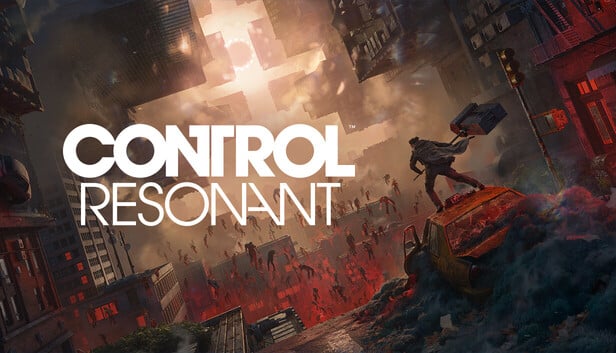
Remedy Entertainment has officially unveiled Control Resonant, the highly anticipated sequel to its 2019 hit Control. First revealed at The Game Awards 2025, the game is set to launch in 2026 for PlayStation 5, Xbox Series X|S, Windows PC (Steam and Epic Games Store), and macOS.
This time, the supernatural chaos spills beyond the walls of the Oldest House and into a warped version of Manhattan — and players step into the role of Dylan Faden.
A New Protagonist: Dylan Faden Takes the Lead
Unlike the first game, which followed Jesse Faden, Control Resonant centers on her brother Dylan Faden.
Dylan, previously a mysterious and volatile presence connected to the Hiss, now emerges as a fully playable protagonist. Remedy has described him as a “supernaturally gifted hero,” wielding powerful new abilities — most notably Shift, a mechanic that allows players to manipulate gravity anomalies and move dynamically through distorted environments.
While Jesse’s role hasn’t been fully detailed, fan speculation suggests she may still appear in some capacity. However, this is Dylan’s story.
Setting: A Warped Manhattan
One of the biggest changes is the setting.
The original Control confined players to the ever-shifting corridors of the Oldest House, headquarters of the Federal Bureau of Control. In Control Resonant, the chaos expands outward into an expansive, paranaturally infected Manhattan.
The city is described as being on the brink of paranatural annihilation, overtaken by the corrupting influence of the Hiss and other reality-warping forces.
This shift allows for:
- Larger, more open zones
- Vertical traversal across distorted cityscapes
- Environmental destruction and gravity-bending combat arenas
- Greater player exploration freedom
Remedy appears to be evolving from a tightly structured action-adventure into something closer to an action-RPG with semi-open environments.
Gameplay: Faster, More Vertical, More Expressive
Early gameplay reveals and previews emphasize one key difference:
Control Resonant is faster and more combat-focused.
Key Gameplay Changes
✅ Shift Ability – Move through gravity distortions and adapt to dynamic environments
✅ Airborne Combat Focus – Increased mobility and aerial attacks
✅ Expanded Skill Tree – More player choice and build customization
✅ Two-Weapon Combat Core – Combat built around weapon synergy and powers
✅ Action-RPG Systems – Greater emphasis on progression and player agency
Previews describe combat as highly mobile and aggressive, with players constantly building power through attacks and ability usage.
Some early impressions compare the mobility to games like Gravity Rush, while others highlight Remedy’s signature cinematic flair layered over faster, more responsive action systems.
Importantly, developers have clarified that the game is not a Soulslike — it’s designed to feel fluid and expressive rather than punishing.
Tone & Story Direction
If the first Control was surreal and bureaucratically uncanny, Control Resonant looks even more unhinged.
The word “Resonant” refers to the idea of frequencies shaping reality — a thematic continuation of the Hiss and paranatural forces introduced in the original.
The story reportedly focuses on:
- The destabilization of reality outside the Oldest House
- Dylan’s evolving powers
- The consequences of containing (or failing to contain) paranatural forces
- Player choice influencing certain outcomes
Remedy is known for blending psychological horror, metaphysical storytelling, and grounded character drama. Expect cryptic documents, unsettling imagery, and layered narrative threads — possibly tying into the broader Remedy Connected Universe alongside Alan Wake.
Production & Development
According to reports, Control 2 entered full production in early 2025 following its production readiness phase.
Interestingly, the sequel is being developed on a smaller budget than Alan Wake II, suggesting Remedy is aiming for a tighter, more mechanically refined experience rather than a massive blockbuster scale.
Despite that, early previews describe the game as:
- More mechanically ambitious
- Combat-heavy
- Structurally broader than the first game
Remedy’s Northlight Engine returns, promising cutting-edge lighting, destruction physics, and environmental distortion effects.
Platforms & Release Window
Release Window: 2026 (with reports indicating Q2 2026 as a target)
Platforms:
- PlayStation 5
- Xbox Series X|S
- Windows PC (Steam & Epic Games Store)
- macOS
The game is currently available to wishlist on Steam.
Community Reactions
The reveal sparked strong reactions across social media and gaming forums.
What Fans Are Excited About:
- The bold protagonist switch to Dylan
- Faster, more action-driven gameplay
- Expanded environments beyond the Oldest House
- Action-RPG elements and player choice
What Some Fans Question:
- Jesse not being playable
- A heavier emphasis on combat over atmosphere
- The tonal shift toward high-mobility action
However, many long-time Remedy fans praise the studio’s willingness to take risks and avoid repeating itself.
As one popular sentiment suggests:
It wouldn’t feel like Remedy if the sequel didn’t evolve dramatically.
How Control Resonant Differs from Control (2019)
| Feature | Control (2019) | Control Resonant (2026) |
|---|---|---|
| Protagonist | Jesse Faden | Dylan Faden |
| Setting | The Oldest House | Warped Manhattan |
| Structure | Metroidvania-style hub | Expansive city zones |
| Combat Style | Tactical telekinetic | Faster, airborne, mobility-focused |
| RPG Elements | Light progression | Expanded skill tree & builds |
| Scale | Contained | Broader, more action-driven |
The Bigger Picture: Remedy’s Evolution
Control Resonant appears to represent:
- A mechanical evolution of Control
- A tonal continuation of Remedy’s reality-bending themes
- A bridge within the Remedy Connected Universe
- A riskier, more action-forward design philosophy
Rather than simply repeating the formula of the first game, Remedy is pushing the franchise into new territory — blending stylish action with surreal storytelling on a larger scale.
Final Thoughts
Control Resonant isn’t just “Control 2.” It’s a reinvention.
By shifting the protagonist to Dylan, expanding the setting into a collapsing Manhattan, and leaning harder into action-RPG systems, Remedy is signaling that this sequel will feel both familiar and radically different.
If the original Control was about mastering a haunted building, Control Resonant looks like it’s about surviving a haunted reality.
And when it launches in 2026, we’ll find out just how far that reality can bend.