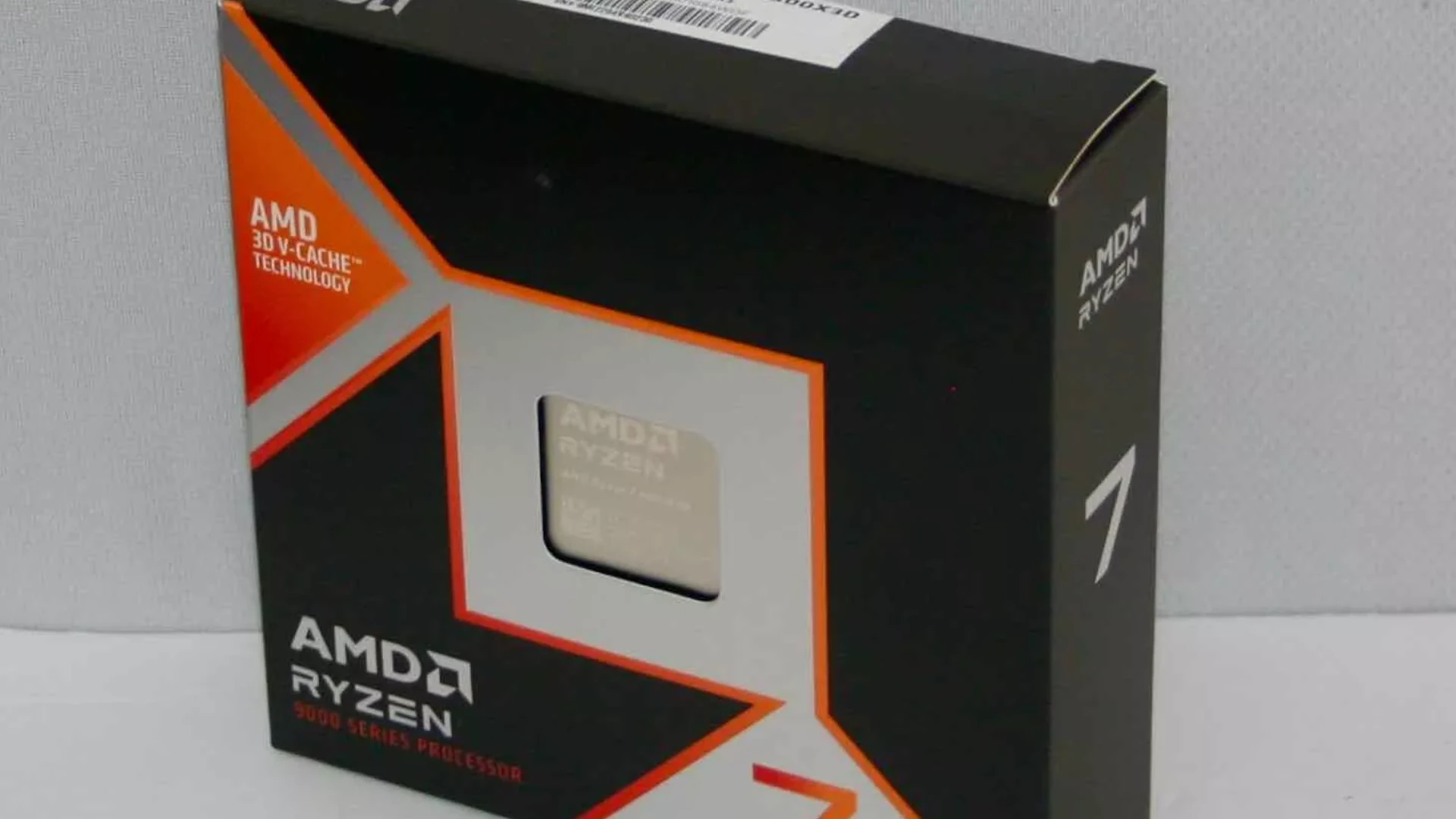
The AMD Ryzen 7 9800X3D is one of AMD’s most important gaming-focused processors in the Ryzen 9000 lineup, combining the new Zen 5 architecture with second-generation 3D V-Cache. Built for enthusiasts and high-end PC builders, it delivers a balance of strong single-core speeds, large cache capacity, and modern platform support.
Below is a complete, SEO-ready article you can publish for the URL amd-ryzen-7-9800x3d-specs.
AMD Ryzen 7 9800X3D Specs
The AMD Ryzen 7 9800X3D is an 8-core, 16-thread desktop processor released on November 7, 2024. It’s based on AMD’s Zen 5 architecture (Granite Ridge) and uses the AM5 socket, making it compatible with the latest generation of motherboards and DDR5 memory.
At launch, the CPU carried an MSRP of $479 and quickly positioned itself as one of the best gaming processors available thanks to its massive L3 cache and improved clock speeds.
Key Specifications
- Cores / Threads: 8 cores, 16 threads
- Base Clock: 4.7 GHz
- Boost Clock: Up to 5.2 GHz
- Architecture: Zen 5 (Granite Ridge)
- Socket: AM5
- Process Node: 4nm (TSMC)
- TDP: 120W
- Integrated Graphics: Radeon Graphics
- Unlocked Multiplier: Yes (overclockable)
Cache & 3D V-Cache Technology
One of the standout features of the Ryzen 7 9800X3D is its 96MB of L3 cache, made possible by AMD’s second-generation 3D V-Cache technology.
This large cache significantly reduces memory latency and improves gaming performance, especially in CPU-bound titles. AMD redesigned the cache layout in this generation to sit beneath the cores, helping improve thermals and allow for higher clock speeds compared to previous X3D chips.
Memory & Platform Support
The Ryzen 7 9800X3D is built for modern systems and requires the AM5 platform.
- Memory Support: DDR5 (officially up to 5600 MT/s)
- Memory Channels: Dual-channel
- ECC Support: Yes
- PCIe Support: PCIe 5.0 (24 lanes)
This makes it ideal for high-speed storage, next-gen GPUs, and future-proof builds.
Performance Overview
With its combination of high clock speeds and large cache, the Ryzen 7 9800X3D excels in gaming scenarios. Reviews consistently highlight it as one of the top gaming CPUs, often outperforming competing chips in frame rate consistency and low-latency workloads.
While it also performs well in productivity tasks, its 8-core design means it may fall behind higher core-count CPUs in heavily multi-threaded workloads like rendering or video encoding.
Power Consumption & Thermals
The processor has a 120W TDP, with peak package power reaching around 162W under load.
- Requires a high-quality air cooler or liquid cooling solution
- No stock cooler included
- Benefits from improved thermal design compared to previous X3D chips
Integrated Graphics
The Ryzen 7 9800X3D includes Radeon integrated graphics, which are suitable for basic display output and light workloads.
However, for gaming or demanding tasks, pairing the CPU with a dedicated GPU is strongly recommended.
Chipset Compatibility
The CPU is compatible with a wide range of AM5 chipsets, including:
- X870E / X870
- B850 / B840
- X670E / X670
- B650E / B650
- A620
This flexibility allows builders to choose between budget and premium motherboard options.
Who Should Buy the Ryzen 7 9800X3D?
The Ryzen 7 9800X3D is best suited for:
- Gamers seeking top-tier performance
- High-end PC builders using the AM5 platform
- Users upgrading from older Ryzen (3000/5000 series)
It may not be the best choice for users focused primarily on heavy productivity workloads, where higher core-count CPUs offer better value.
Summary of AMD Ryzen 7 9800X3D Specs
- Zen 5 architecture with 4nm process
- 8 cores / 16 threads
- 4.7 GHz base, 5.2 GHz boost
- 96MB L3 cache with 3D V-Cache
- DDR5 and PCIe 5.0 support
- 120W TDP
- AM5 platform compatibility
The Ryzen 7 9800X3D stands out as a gaming-first CPU that leverages cache innovation and strong clock speeds to deliver exceptional real-world performance, particularly in modern titles where latency and memory access speed matter most.