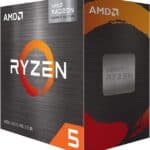
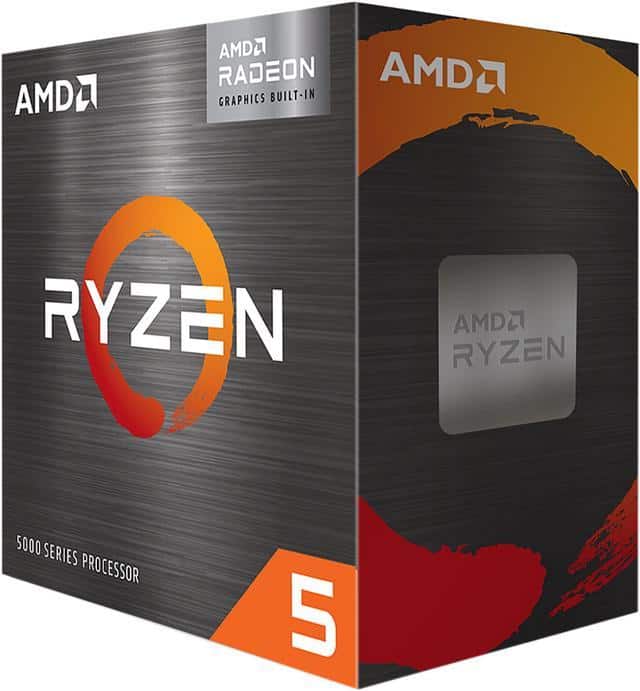
Looking for the best AM4 CPU for gaming can be confusing with so many options available. The market has several powerful processors that can handle modern games, but one stands out from the rest. The Ryzen 7 5800X3D is widely considered the absolute best AM4 CPU for gaming performance, offering exceptional frame rates that other AM4 processors simply can’t match.
While newer platforms like AM5 exist, many gamers still prefer sticking with their AM4 motherboards to avoid the cost of a complete system upgrade. The 5800X3D offers a perfect balance of price and performance for those wanting to maximize their gaming experience on the AM4 platform. This processor’s large cache memory gives it a significant advantage in gaming workloads compared to other options.
For budget-conscious gamers, the Ryzen 5 5600X represents an excellent alternative, delivering strong gaming performance with its 6 cores and 12 threads at a more affordable price point. The AM4 platform continues to offer great value even in 2026, making these processors worthwhile investments for gamers not ready to upgrade their entire system.
Best AM4 CPU for Gaming in 2026
The AM4 platform is still highly relevant in 2026, especially for gamers looking to upgrade without switching to a new motherboard. The standout choice remains the AMD Ryzen 7 5800X3D, thanks to its 3D V-Cache technology that significantly boosts gaming performance.
Even years after release, it competes with newer CPUs in many titles, making it the best value upgrade for existing AM4 users.
Top AM4 CPUs for gaming:
- AMD Ryzen 7 5800X3D – best overall gaming performance
- AMD Ryzen 5 5600X – budget-friendly and efficient
- AMD Ryzen 9 5900X – great for gaming + productivity
- AMD Ryzen 7 5700X – balanced performance and price
Why AM4 still makes sense:
- Lower upgrade cost (reuse motherboard and RAM)
- Mature BIOS and stability
- Excellent 1080p and 1440p gaming performance
Things to consider:
- Update BIOS before upgrading
- Pair with a good GPU to avoid bottlenecks
- Ensure adequate cooling for higher-end CPUs
Key Takeaways
- The Ryzen 7 5800X3D delivers unmatched gaming performance on the AM4 platform with its advanced cache design.
- Budget gamers can achieve excellent results with the more affordable Ryzen 5 5600X without changing motherboards.
- AM4 processors remain relevant in 2026 despite newer platforms, offering strong value for gamers looking to upgrade just their CPU.
Exploring the AM4 Platform and CPU Evolution
AMD’s AM4 platform revolutionized the CPU market with its long-term socket compatibility and impressive performance gains across multiple generations. This platform has become a favorite among gamers seeking powerful yet cost-effective solutions.
The Significance of AM4 Socket
The AM4 socket, introduced in 2016, stands as one of AMD’s most successful platforms due to its remarkable longevity. Unlike Intel’s frequent socket changes, AM4 supported multiple CPU generations from first-gen Ryzen through Ryzen 5000 series.
This backward compatibility allowed users to upgrade their CPUs without replacing motherboards, creating significant cost savings. Many gamers still choose AM4 builds in 2026 because high-end options like the 5800X3D remain competitive with newer generations.
The platform supports various chipsets including B350, X370, B450, X470, B550, and X570, each offering different features and price points to match diverse user needs.
Advancements in AMD’s CPU Architecture
The AM4 platform showcased dramatic architectural improvements through its lifespan. Early Zen architecture brought AMD back to competitiveness, while Zen+ offered modest refinements in 2018.
Zen 2 marked a significant leap with 7nm manufacturing, greatly improving power efficiency and introducing chiplet design. This architecture delivered substantial IPC (Instructions Per Clock) gains and doubled core counts compared to first-generation offerings.
Zen 3 represented the pinnacle for AM4, bringing unified cache design that reduced latency and dramatically improved gaming performance. This architecture powers the 5800X3D, which uses innovative 3D V-Cache technology to stack additional cache memory, significantly boosting gaming performance.
Transition from Zen 3 to Zen 4
Zen 3 represents the final architecture for AM4, with Zen 4 moving exclusively to the newer AM5 socket. This transition marks the end of an era but also introduces new capabilities.
The 5800X3D stands as AM4’s gaming champion, often matching or beating newer CPUs in gaming-specific workloads. Its specialized 3D V-Cache design delivers exceptional frame rates even in 2026, making it a compelling option for budget-conscious gamers.
Zen 4 on AM5 brings DDR5 support, PCIe 5.0, and improved power efficiency, but at higher platform costs. Many gamers continue choosing AM4 builds with Zen 3 processors like the 5700X or 5800X3D due to their excellent price-to-performance ratio and mature platform stability.
The Leading AM4 Gaming CPUs
AMD’s AM4 platform continues to offer excellent gaming CPUs in 2026, despite newer socket options becoming available. The 5800X3D stands out as the undisputed champion for gaming performance on this platform.
Ryzen 5 5600 and 9600X: The Budget-Friendly Workhorses
The Ryzen 5 5600 remains one of the best value options for AM4 gaming builds. With 6 cores and 12 threads, it handles modern games smoothly while keeping costs reasonable. The chip runs efficiently with a 65W TDP and offers boost speeds up to 4.4GHz.
For those with slightly more budget, the 9600X delivers improved single-core performance which benefits many gaming titles. This CPU shows approximately 15% better frame rates in popular titles compared to the base 5600.
These processors pair well with mid-range GPUs like the RTX 4060 or Radeon 7600. Both support PCIe 4.0 and work with most AM4 motherboards after a BIOS update.
Ryzen 7 Lineup: Balancing Performance and Price
The standout in the Ryzen 7 family is undoubtedly the 5800X3D. This CPU features AMD’s revolutionary 3D V-Cache technology, providing 96MB of L3 cache specifically designed to boost gaming performance.
According to multiple benchmark results, the 5800X3D outperforms even newer generation CPUs in many gaming scenarios. The newer 5700X3D offers similar performance at a slightly lower price point and reduced power consumption.
The standard 5800X remains viable for those who need a balance of gaming and productivity tasks. All Ryzen 7 models feature 8 cores and 16 threads, making them future-proof for upcoming games that may utilize more cores.
The Dominance of Ryzen 9 7950X3D
While technically not an AM4 CPU (it uses AM5), the Ryzen 9 7950X3D deserves mention as AMD’s flagship gaming processor. Gamers looking to upgrade from AM4 often target this model for its exceptional performance.
The 7950X3D combines 16 cores with AMD’s 3D V-Cache technology, resulting in what many consider the fastest gaming chip available. For pure gaming performance on AM4, however, the 5800X3D remains the closest alternative.
Users who need both gaming performance and productivity power should consider this CPU for their next build, though it requires a platform upgrade from AM4 to AM5.
Benchmarking Performance: Gaming and Beyond
When selecting the best AM4 CPU for gaming, benchmarks provide crucial data on real-world performance. These tests reveal how processors handle different games and workloads, helping gamers make informed decisions based on measurable results rather than specifications alone.
Analyzing Gaming Benchmarks
The Ryzen 7 5800X3D stands out as the gaming performance champion on the AM4 platform. Its innovative 3D V-Cache technology delivers exceptional frame rates in most popular titles. In 1080p gaming scenarios, it often outperforms even newer generation chips from both AMD and Intel.
The newer Ryzen 7 5700X3D shows up as a solid alternative in benchmarks. It delivers about 10% lower gaming performance compared to the 5800X3D, but comes with a better price-to-performance ratio. This makes it an attractive option for gamers on a tighter budget.
For competitive gamers focused on high refresh rate monitors, benchmark data indicates these X3D processors consistently deliver smoother gameplay in CPU-intensive titles like simulation games and competitive shooters.
CPU Benchmarks Hierarchy
In the current CPU benchmarks hierarchy, AM4 processors fall into distinct performance tiers:
Top Tier (Gaming):
- Ryzen 7 5800X3D
- Ryzen 7 5700X3D
High Performance (Mixed Use):
- Ryzen 9 5950X
- Ryzen 9 5900X
Mid-Tier (Value Gaming):
- Ryzen 7 5800X
- Ryzen 5 5600X
The 5800X3D tops the gaming charts specifically, while the 5950X excels in productivity metrics with its 16 cores. For users who need both gaming and productivity performance, the 5900X offers an excellent balance.
When comparing gaming scores across generations, the specialized cache design of X3D models often delivers better gaming results than processors with higher core counts or clock speeds.
Overclocking for Enhanced Performance
AM4 processors offer varying overclocking potential that can boost gaming performance beyond stock settings. The standard Ryzen chips like the 5800X and 5900X have good overclocking headroom, often reaching 4.6-4.8 GHz on all cores with proper cooling.
The X3D models present a different scenario. The 5800X3D’s overclocking capabilities are more limited due to its specialized design and lower default voltage ceiling. Instead of traditional frequency overclocking, users often find better results by optimizing memory timing and utilizing Precision Boost Overdrive (PBO) settings.
For effective overclocking:
- Invest in quality cooling (240mm AIO or better)
- Use PBO and Curve Optimizer for fine-tuning
- Pair with fast DDR4-3600+ memory with tight timings
Careful overclocking can yield 5-15% improved performance in CPU-limited games, though results vary by specific processor model and silicon quality.
Frequently Asked Questions
AMD’s AM4 socket has remained a popular choice for gamers looking to build or upgrade their systems. The platform offers several excellent CPU options at different price points, with distinct performance characteristics for gaming workloads.
What are the top performance contenders for AM4 gaming CPUs as of 2026?
The Ryzen 7 5800X3D stands as the undisputed gaming champion on the AM4 platform. Its specialized 3D V-Cache technology gives it exceptional gaming performance that outpaces all other AM4 options.
The Ryzen 9 5950X represents the highest-end option with 16 cores and 32 threads. While primarily designed for production workloads, it delivers excellent gaming performance as well.
For those seeking balance between gaming and productivity, the Ryzen 7 5700X3D offers similar gaming benefits to the 5800X3D at a slightly lower price point.
How does the Ryzen 7 5800X3D compare with other CPUs for gaming on the AM4 platform?
The 5800X3D’s performance advantage comes from its massive 96MB of L3 cache, which significantly reduces memory latency in games. This gives it a substantial frame rate advantage in many titles.
When compared to the standard 5800X, the 5800X3D can deliver 15-30% higher frame rates in cache-sensitive games. This performance gap is particularly noticeable in simulation, strategy, and open-world titles.
The 5800X3D even competes favorably against newer generation CPUs in many games, making it an excellent choice for those with existing AM4 motherboards.
Which budget-friendly AM4 processors are recommended for gaming?
The Ryzen 5 5600 offers exceptional value for budget-conscious gamers. With 6 cores and 12 threads, it handles modern games efficiently while costing significantly less than higher-tier options.
The Ryzen 5 5600X provides slightly better performance with higher clock speeds, making it worth considering if found on sale or at a small premium over the base 5600.
For ultra-budget builds, the Ryzen 5 3600 remains relevant in 2026 for 1080p gaming when paired with a mid-range graphics card.
What is the gaming performance impact of upgrading to the latest AM4 CPUs?
Upgrading from a first or second-generation Ryzen processor to a 5000-series CPU can yield 20-40% performance improvements in CPU-limited scenarios. This difference is most noticeable in competitive games that target high frame rates.
Users with older Ryzen 3000 series CPUs will see more modest gains of 10-25% when upgrading to a 5800X3D, with the benefits varying significantly by game title.
The upgrade impact is most substantial when playing at 1080p resolution, where the CPU has more influence on frame rates compared to 1440p or 4K gaming.
Can you provide a tier list of the best AM4 CPUs for gaming currently available?
S-Tier: Ryzen 7 5800X3D – The undisputed gaming champion on AM4 with unmatched cache performance.
A-Tier: Ryzen 7 5700X3D, Ryzen 9 5900X, Ryzen 9 5950X – Excellent gaming performance with additional cores for multitasking.
B-Tier: Ryzen 7 5800X, Ryzen 5 5600X – Strong gaming performance at more accessible price points.
C-Tier: Ryzen 5 5600, Ryzen 5 5500 – Budget-friendly options that handle most modern games well.
D-Tier: Ryzen 5 3600, Ryzen 7 3700X – Older generation CPUs that remain viable for entry-level gaming builds.
What factors should be considered when choosing a gaming CPU for an AM4 motherboard?
Motherboard compatibility is crucial, as not all AM4 boards support the latest 5000-series CPUs. Check the manufacturer’s website for BIOS update requirements before purchasing.
Budget allocation between CPU and GPU matters significantly. For gaming, investing more in the graphics card often yields better results than overspending on the processor.
Consider your display resolution and refresh rate. Higher resolutions like 1440p and 4K are more GPU-dependent, making expensive CPUs less impactful for overall gaming performance.
Future upgrade plans should factor into your decision. The AM4 platform has reached its end of life, so the CPU you choose now will likely be your last on this socket.