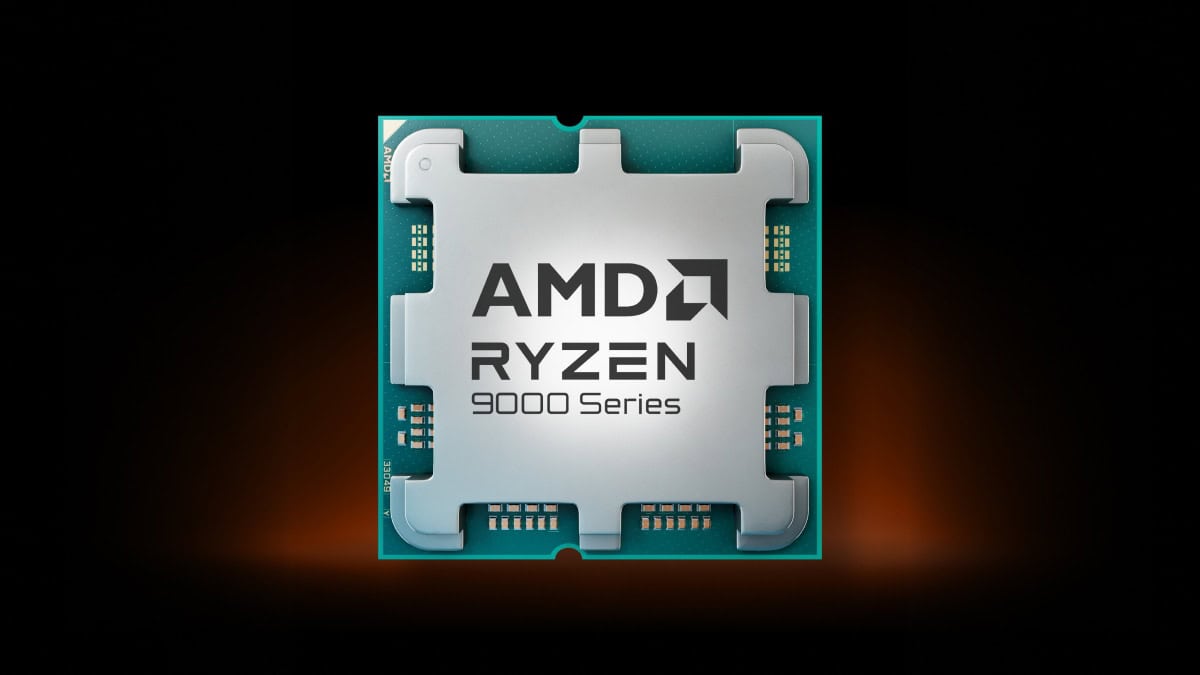
Choosing the right CPU is a critical decision for any gaming PC build. It affects how well your games run, how smoothly they perform, and whether your system can handle the latest titles. The AMD Ryzen 7 9800X3D currently stands as the top gaming processor on the market, offering exceptional performance for serious gamers.
A quality gaming CPU balances power, efficiency, and value while working with your graphics card to deliver the best possible gaming experience. Different processors offer varying advantages at different price points, making it important to understand what makes a CPU good for gaming. Whether you’re building a new system or upgrading an existing one, finding the right processor will significantly impact your gaming enjoyment.
Ranking The Best CPUs
| Rank | Model | Cores | Clock | Generation |
|---|---|---|---|---|
| 1 | AMD Ryzen 7 9800X3D | 8 | 4.7 GHz | Zen 5 |
| 2 | AMD Ryzen 5 9600X | 6 | 3.9 GHz | Zen 5 |
| 3 | AMD Ryzen 9 9950X3D | 16 | 4.3 GHz | Zen 5 |
| 4 | AMD Ryzen 7 7700X | 8 | 4.5 GHz | Zen 4 |
| 5 | AMD Ryzen 7 9700X | 8 | 3.8 GHz | Zen 5 |
| 6 | AMD Ryzen 7 9850X3D | 8 | 4.7 GHz | Zen 5 |
| 7 | Intel Core i7-14700K | 20 | 3.4 GHz | Raptor Lake Refresh |
| 8 | Intel Core Ultra 7 270K Plus | 24 | 3.7 GHz | Arrow Lake |
1. AMD Ryzen 7 9800X3D
The AMD Ryzen 7 9800X3D stands out as the fastest gaming chip currently available on the market. What makes it exceptional is its cutting-edge 3D V-Cache technology, which gives it a significant advantage in gaming performance.
Benchmark results show impressive capabilities. The 9800X3D easily outperforms Intel’s more expensive offerings, making it a compelling choice for gamers who prioritize maximum frame rates. It has quickly become the go-to processor for high-end gaming builds.
Performance comparisons reveal the 9800X3D is approximately 11.4% faster in gaming at 1080p than its predecessor, the 7800X3D. This generational improvement demonstrates AMD’s continued commitment to advancing gaming performance.
One consideration is power consumption. Tests indicate the 9800X3D consumes around 45% more power than the previous generation. Gamers with adequate cooling solutions will find this a reasonable trade-off for the performance gained.
The processor’s popularity stems from its specialized design. The 3D V-Cache technology specifically enhances gaming workloads by providing additional cache memory that games can utilize effectively.
For gamers who multitask, the 9800X3D remains dominant for gaming while streaming or using secondary displays. Many users report smooth performance when gaming at 4K resolution while simultaneously running YouTube or Twitch on a second screen.
The performance benefits are most noticeable at 1080p resolution where CPU limitations are more apparent. At higher resolutions like 4K, the performance difference may be less significant as games become more GPU-bound.
2. Intel Core i5 13400F
The Intel Core i5 13400F stands as a compelling option for gamers seeking strong performance without breaking the bank. This economical 10-core processor combines both performance and efficiency cores to deliver robust gaming capabilities.
Priced at approximately $210, the 13400F represents significant value in the mid-range CPU market. It features a 4.6GHz boost clock that provides ample processing power for most modern gaming titles.
One notable advantage of this CPU is its versatility. The processor works well in less expensive motherboards, making it suitable for budget-conscious builds without sacrificing essential performance.
For pure gaming performance, the i5 13400F delivers impressive framerates across various titles. The additional cores compared to previous generations help with multitasking and background processes while gaming.
When compared to its predecessor, the 13400F offers meaningful improvements. It is decidedly better than the 12400F in every way, though prospective buyers should consider if the approximately $57 price difference justifies the performance gains for their specific needs.
It’s worth noting that the 13400F may not pair optimally with high-end graphics cards. Gamers planning to use top-tier GPUs might want to consider more powerful CPU options to avoid potential bottlenecks.
The “F” designation in the model name indicates this processor lacks integrated graphics. This isn’t typically a concern for gamers who will pair it with a dedicated graphics card.
Core i5 processors have long been considered the sweet spot for gaming, and the 13400F continues this tradition. For most of 2022, PC Gamer recommended the previous generation i5 as their choice for best gaming CPU, and the 13400F improves upon that foundation.
3. AMD Ryzen 9 9800X3D
The AMD Ryzen 9 9800X3D stands out as a remarkable CPU in the gaming market in 2025. According to numerous benchmarks, it has earned the title of AMD’s fastest gaming chip and the fastest available on the market, outperforming even Intel’s more expensive offerings.
What makes the 9800X3D special is its 3D V-Cache technology. This innovation provides the processor with additional cache memory that significantly improves gaming performance. The technology has become a key reason for the CPU’s growing popularity among gamers.
Performance tests consistently show the 9800X3D excelling in gaming scenarios. When compared to other processors, including AMD’s own lineup, the 9800X3D delivers higher frame rates and smoother gameplay across a variety of titles.
For those debating between different AMD options, the choice often comes down to specific use cases. The 9950X is better for productivity while the 9800X3D is superior for gaming. Gamers who occasionally work on creative projects might consider the 9950X3D, which balances both needs.
While the 9800X3D excels in gaming, it’s important to note its capabilities for content creators. Though primarily marketed as a gaming CPU, tests show it performs adequately for creative workloads as well, making it a viable option for gamers who stream or edit videos.
Price-to-performance ratio remains a strong point for the 9800X3D. Despite being a premium product, the gaming performance advantage justifies the investment for enthusiasts seeking the best possible gaming experience.
Compatibility with existing AM5 motherboards adds to the appeal of the 9800X3D, allowing for easier upgrades without requiring a complete system overhaul.
4. AMD Ryzen 7 7800X3D
The AMD Ryzen 7 7800X3D stands as one of the most impressive gaming CPUs available today. Built on AMD’s Zen 4 architecture, this processor features eight cores with 3D V-Cache technology that gives it a significant edge in gaming performance.
The 3D V-Cache technology provides the chip with an expanded cache memory, allowing games to access data more quickly. This architectural advantage makes the 7800X3D particularly powerful for gaming applications where quick data access is crucial.
Gaming enthusiasts praise the CPU for its ability to deliver high frame rates in demanding titles. The 7800X3D often outperforms competitors that cost significantly more, making it a value-oriented option for gamers seeking top-tier performance.
Experts have noted the processor’s efficiency alongside its raw power. According to reviews, the 7800X3D offers supreme efficiency and pure gaming power, making it an excellent choice for gamers concerned about power consumption.
The single CCD design with 3D V-Cache stacked on top helps the 7800X3D achieve its impressive gaming performance. This design choice focuses on optimizing the aspects that matter most for gaming rather than trying to excel at everything.
Recent updates have further improved the 7800X3D’s capabilities. Firmware updates continue to enhance performance for the 7000 series CPUs, with official updates typically arriving quarterly.
For gamers building a new system or upgrading an existing one, the 7800X3D offers exceptional value. The combination of high gaming performance, reasonable power requirements, and competitive pricing makes it a compelling option in today’s market.
5. Intel Core i7-14700K
The Intel Core i7-14700K stands out as a compelling choice for gamers seeking high-performance without breaking the bank. This processor delivers equivalent performance to the Core i9-13900K and Ryzen 9 7950X3D while costing nearly $200 less, making it an excellent value proposition.
Gamers will appreciate the i7-14700K’s ability to produce high frame rates across various titles. The processor doesn’t compromise on multithreaded performance either, ensuring smooth gameplay even in CPU-intensive scenarios.
In benchmark testing at 1080p with DirectX 11, the 14700K achieves around 106FPS average. This puts it slightly behind the 13900K but approximately 1-2% better than its predecessor, the 13700K.
What makes the 14700K particularly attractive is that Intel introduced marked improvements over the previous generation without increasing the price. This processor represents the best value among Intel’s refreshed “Raptor Lake” CPUs.
For those concerned about future gaming demands, the i7-14700K can easily handle games at 1080p resolution with ultra settings. It also delivers better ray tracing performance and frame generation, technologies that are becoming increasingly important in modern gaming.
The processor strikes an impressive balance between single-core performance for gaming and multi-core capability for streaming or background tasks. This makes it ideal for gamers who also use their systems for content creation or multitasking.
Temperature management and power consumption remain reasonable for the performance level, though a quality cooling solution is recommended to maintain optimal boost clocks during extended gaming sessions.
6. Intel Core i5 12400F
The Intel Core i5 12400F is a standout budget gaming CPU that delivers impressive performance without breaking the bank. Released as part of Intel’s 12th generation Alder Lake lineup, this processor has become a favorite among cost-conscious gamers.
This six-core, twelve-thread CPU offers a base clock of 2.5 GHz and can boost up to 4.4 GHz when needed. The “F” designation indicates it lacks integrated graphics, requiring a dedicated graphics card – which most gamers will use anyway.
In real-world gaming scenarios, the i5 12400F demonstrates excellent capabilities. Paired with an RTX 3060 Ti, it can achieve 360+ FPS in Fortnite’s creative mode, showing its potential for competitive gaming.
The processor’s performance in 2024 remains competitive. Recent testing across 10 popular and demanding games paired with an RX 6900 XT shows that this CPU can still handle modern titles effectively, despite being from an older generation.
Price-to-performance ratio is where the i5 12400F truly shines. Tom’s Hardware recognizes it as one of the best CPUs for gaming in 2025, remarkable for a processor from 2021.
PCGamesN describes it as an “amazingly generous price” for the performance it delivers. This value proposition makes it an excellent choice for budget gaming builds where every dollar matters.
For pure gaming purposes, the i5 12400F holds its ground well. However, users requiring more productivity performance might consider newer options like the AMD Ryzen 5 7600, which outperforms it in most aspects.
The i5 12400F uses the LGA 1700 socket and supports both DDR4 and DDR5 memory, offering flexibility in system configuration. This compatibility with DDR4 can help keep overall system costs lower.
7. AMD Ryzen 7 7700
The AMD Ryzen 7 7700 stands as an impressive CPU option for gamers seeking strong performance without reaching for the highest-tier processors. This 8-core, 16-thread chip delivers exceptional gaming performance while still handling productivity tasks with ease.
Gamers looking to play at 1440p resolution will find the 7700 more than capable. It’s often considered the next best thing for gaming after AMD’s premium 7800X3D and 7900X models. The balance of performance and price makes it particularly attractive.
Power efficiency is another notable strength of the 7700. Users report it consumes nearly a third less power than the higher-end 7950X while still delivering 60-90% of the performance across various benchmarks.
For builders on a budget, the 7700 comes with the AMD Wraith Prism cooler featuring RGB LED lighting. This inclusion saves the additional expense of purchasing an aftermarket cooling solution.
The processor is fully unlocked, allowing enthusiasts to explore overclocking potential. This feature provides room for performance tuning as gaming demands increase over time.
When compared to Intel alternatives, the Ryzen 7 7700 holds its ground well in gaming scenarios, though it faces stiff competition from options like the Intel Core i5 in certain applications. The decision often comes down to specific use cases and current pricing.
8. Intel Core i7-8700K
The Intel Core i7-8700K remains a formidable processor for gaming despite being released several years ago. With 6 cores and 12 threads, this CPU continues to deliver excellent performance in modern games.
The 8700K features a base clock of 3.7GHz and can boost up to 4.7GHz, providing substantial processing power. When overclocked to 5GHz, it can match newer CPUs in many gaming scenarios.
Many gamers still rely on the i7-8700K because it offers a sweet spot of high single-core performance and adequate multi-threading capabilities. This processor remains competitive even when paired with high-end graphics cards.
For those wondering about upgrading, the 8700K pairs nicely with GPUs like the RTX 3080 or even 3090 for 4K gaming. This makes it a cost-effective option for gamers who don’t want to upgrade their entire system.
The processor’s longevity in the gaming market speaks to Intel’s strong architecture design. Many users report excellent performance in CPU-intensive titles without experiencing bottlenecks with modern GPUs.
Heat management should be considered when using this processor, especially when overclocking. A quality cooling solution is recommended to maintain optimal performance during extended gaming sessions.
For 1440p and 4K gaming, the i7-8700K remains particularly strong, as these resolutions tend to be more GPU-limited than CPU-dependent. This means gamers can often postpone CPU upgrades while investing in better graphics cards.
While newer generations offer improvements, the performance gap in many games isn’t dramatic enough to justify immediate upgrades for 8700K owners. The processor continues to handle today’s games with impressive efficiency.
9. AMD Ryzen 5 7600X
The AMD Ryzen 5 7600X represents a solid option for gamers seeking performance without breaking the bank. This 6-core, 12-thread processor features AMD’s Zen 4 architecture, which delivers impressive single-core performance crucial for gaming applications.
With boost clock speeds reaching up to 5.3 GHz, the 7600X handles demanding titles efficiently. The processor includes 38MB of cache, which helps reduce latency during gameplay and improves overall responsiveness.
Some gamers report excellent real-world performance with this CPU. When paired with high-end graphics cards, users have noted the 7600X allows their GPU to run at 98+% utilization in most games, indicating the processor isn’t creating bottlenecks.
The 7600X includes integrated Radeon graphics, providing basic display capabilities without a dedicated GPU. This feature proves helpful for system building or troubleshooting, though serious gamers will still want a dedicated graphics card.
Not all reviews are unanimously positive. Some performance evaluations suggest the gaming advantage may not justify the cost for certain users, with PCMag noting the slim performance gains in some gaming scenarios.
The processor continues to attract attention in 2024, with enthusiasts creating dedicated build guides around this CPU. These guides often highlight the value proposition of the 7600X for gamers seeking performance without premium pricing.
The AM5 socket compatibility provides a potential upgrade path for users, allowing future processor upgrades without motherboard replacement.
10. Intel Core i9-13900K
The Intel Core i9-13900K represents a high-end CPU option that delivers exceptional performance for demanding gamers. Released as part of Intel’s 13th generation lineup, this processor packs impressive specifications that make it suitable for both gaming and other intensive tasks.
With 24 cores (8 performance cores and 16 efficiency cores) and 32 threads, the i9-13900K offers substantial processing power. This core configuration helps handle multiple tasks simultaneously while maintaining smooth gaming performance.
For gaming enthusiasts concerned about longevity, this processor provides some peace of mind. While some experts suggest the i7 model is sufficient for gaming, the i9-13900K offers additional headroom that may prove valuable in the future.
The CPU performs exceptionally well with high-end graphics cards. It’s described as “superb” and “extremely good company for an enthusiast-grade graphics card” by professional reviewers, highlighting its capability to prevent bottlenecks with top-tier GPUs.
Its thermal performance requires consideration. Due to its power, the i9-13900K can run hot during intense operations, necessitating robust cooling solutions to maintain optimal performance.
Despite newer processors now available, the i9-13900K remains recommended for “high-spec gaming enthusiasts and power users” in 2024. This suggests excellent longevity for those investing in this CPU.
The processor also excels beyond gaming. It’s very capable for both gaming and video editing, making it a solid choice for content creators who game.
Price represents the main drawback for this CPU. The performance comes at a premium cost compared to lower-tier options that might still deliver adequate gaming performance for most users.
Understanding CPU Specifications
CPU specifications directly impact gaming performance and can be confusing to navigate. The right balance of clock speed, core count, and cache size will determine how well your processor handles different types of games and workloads.
Clock Speed and its Importance
Clock speed, measured in GHz (gigahertz), represents how many processing cycles your CPU can execute per second. Higher clock speeds generally mean better performance in gaming, especially for titles that don’t utilize multiple cores effectively.
Many modern games still rely heavily on single-core performance. This is why the Ryzen 7 9800X3D delivers exceptional gaming results despite not always having the highest core count.
When comparing CPUs, base clock speed refers to the guaranteed minimum speed, while boost clock indicates the maximum speed under ideal conditions. Gaming performance often correlates more strongly with sustained boost clocks than with base speeds.
Overclocking can push clock speeds beyond factory settings, but requires adequate cooling and may void warranties. Modern CPUs like Intel’s K-series and AMD’s X-series are designed specifically for this purpose.
Core Count and Multi-threading
CPU cores function as individual processors within a single chip. Each core can handle separate tasks simultaneously, improving multitasking capabilities and performance in properly optimized games.
Modern gaming increasingly utilizes multiple cores. AAA titles now commonly take advantage of 6-8 cores, though some older or simpler games may only use 2-4 cores effectively. CPU-intensive tasks like streaming while gaming benefit significantly from higher core counts.
Multi-threading technology (Intel’s Hyper-Threading or AMD’s SMT) allows each physical core to handle two threads of instructions simultaneously. This creates virtual cores that improve performance in thread-heavy applications.
For most gamers, the sweet spot currently sits between 6-8 cores with multi-threading. Entry-level gaming systems can function with 6 cores, while enthusiasts might opt for 12-16 cores for future-proofing and mixed workloads.
Cache Size and Performance Effects
CPU cache serves as ultra-fast memory built directly into the processor. It stores frequently used data to avoid slower RAM access, significantly reducing latency in gaming scenarios.
Cache levels:
- L1: Smallest but fastest, typically 64KB-128KB per core
- L2: Larger but slightly slower, usually 512KB-2MB per core
- L3: Shared across all cores, 16MB-128MB depending on the model
The AMD Ryzen 9 9950X3D and 9800X3D processors utilize AMD’s 3D V-Cache technology, which dramatically increases L3 cache size to improve gaming performance. This technology has proven particularly effective in memory-intensive games.
Cache size impacts gaming performance by reducing memory access times. Games with large assets or complex AI systems benefit most from larger cache sizes. When comparing similar CPUs, the one with more cache often delivers better real-world gaming performance.
Compatibility Considerations
When choosing a gaming CPU, understanding the physical and technical requirements ensures optimal performance and prevents costly mistakes. These factors will determine whether your new processor will actually work in your system and reach its full potential.
Motherboard and Chipset Compatibility
CPU compatibility starts with the motherboard socket type. AMD and Intel use different socket designs that physically cannot interchange. The AMD Ryzen 9 9800X3D requires an AM5 socket, while Intel’s Core i7-14700K needs an LGA 1700 socket.
Beyond the physical socket, chipset compatibility determines which features will be available. For example, AMD’s Ryzen 7000 and 9000 series processors work with X670, B650, and A620 chipsets, but overclocking features vary between them.
BIOS updates may be necessary when installing a newer CPU in an older motherboard. Manufacturers often release updates to support new processor generations, so check their websites before purchasing.
Cooling Solutions and Power Requirements
High-performance CPUs generate significant heat, requiring appropriate cooling solutions. The Intel Core i7-14700K has a TDP of 125W but can draw much more power during intensive gaming, necessitating robust cooling.
Air coolers work well for mid-range processors like the Ryzen 7 7700, but premium gaming CPUs often benefit from liquid cooling solutions. The cooling requirements correlate with both TDP and overclocking potential.
Power supply considerations are equally important. Gaming CPUs can draw between 65W-225W under load, but system requirements are much higher. A quality 750W+ PSU is recommended for systems with high-end CPUs like the Ryzen 7 9700X and powerful GPUs.
Ensure your case provides adequate airflow, as restricted air movement can lead to thermal throttling, reducing gaming performance regardless of your CPU’s capabilities.
Frequently Asked Questions
Choosing the right CPU for gaming involves understanding performance benchmarks, price points, and compatibility with other components. Here are answers to common questions that can help you make an informed decision for your gaming setup.
What are the top-performing CPUs for gaming as of 2025?
The AMD Ryzen 7 9800X3D currently stands as one of the best processors for gaming, offering an excellent balance of price and performance. Its 3D V-Cache technology gives it an edge in many gaming scenarios.
The AMD Ryzen 9 9800X3D takes performance even further with more cores and threads, making it ideal for gamers who also run demanding background applications.
For Intel fans, the Core i7-14700K delivers exceptional gaming performance with strong single-thread capabilities, which many games still heavily rely on.
Which budget CPUs provide the best performance-to-price ratio for gamers?
The Intel Core i5 13400F offers tremendous value for budget-conscious gamers. It provides solid gaming performance without breaking the bank.
AMD’s Ryzen 7 7700 also offers excellent performance at a competitive price point, making it a great option for mid-range gaming builds.
Budget processors often sacrifice features like overclocking potential rather than core gaming performance, making them suitable for most mainstream titles.
How do Intel and AMD gaming CPUs compare in terms of performance?
AMD processors, particularly the X3D variants like the 7800X3D, typically excel in gaming thanks to their innovative cache design that reduces memory latency in games.
Intel CPUs generally offer stronger single-core performance, which benefits games that don’t utilize many cores. The architecture differences result in varying performance across different game titles.
Temperature management tends to be better on AMD chips, while Intel often has a slight edge in peak frame rates in certain titles.
What are the essential CPU specifications to consider for optimal gaming?
Core count and thread count are important, but most games still don’t fully utilize more than 8 threads. For multiplayer games, having extra threads can be beneficial.
Clock speed remains crucial for gaming performance, with higher frequencies generally resulting in better frame rates in most games.
Cache size, particularly the new 3D V-Cache technology from AMD, has proven to significantly impact gaming performance by reducing data access times.
Can you recommend a CPU that is optimized for both gaming and streaming?
The AMD Ryzen 9 9800X3D is excellent for gaming and streaming simultaneously due to its higher core count and thread count, which can handle game rendering and video encoding concurrently.
The Intel Core i7-14700K also performs admirably for streaming setups, with its robust core configuration providing enough overhead for both tasks.
Dedicated streamers might consider processors with even more cores, though there are diminishing returns for gaming performance beyond certain specifications.
Which motherboards pair well with the leading gaming CPUs for a high-performance setup?
For AMD Ryzen 7000 and 9000 series processors, X670E and B650 motherboards provide the necessary AM5 socket compatibility along with PCIe 5.0 support for future expansion.
Intel 14th generation processors like the i7-14700K work best with Z790 motherboards, which offer full overclocking support and robust power delivery for sustained performance.
Consider motherboards with good VRM cooling, especially when pairing with high-end CPUs that draw significant power under gaming loads.