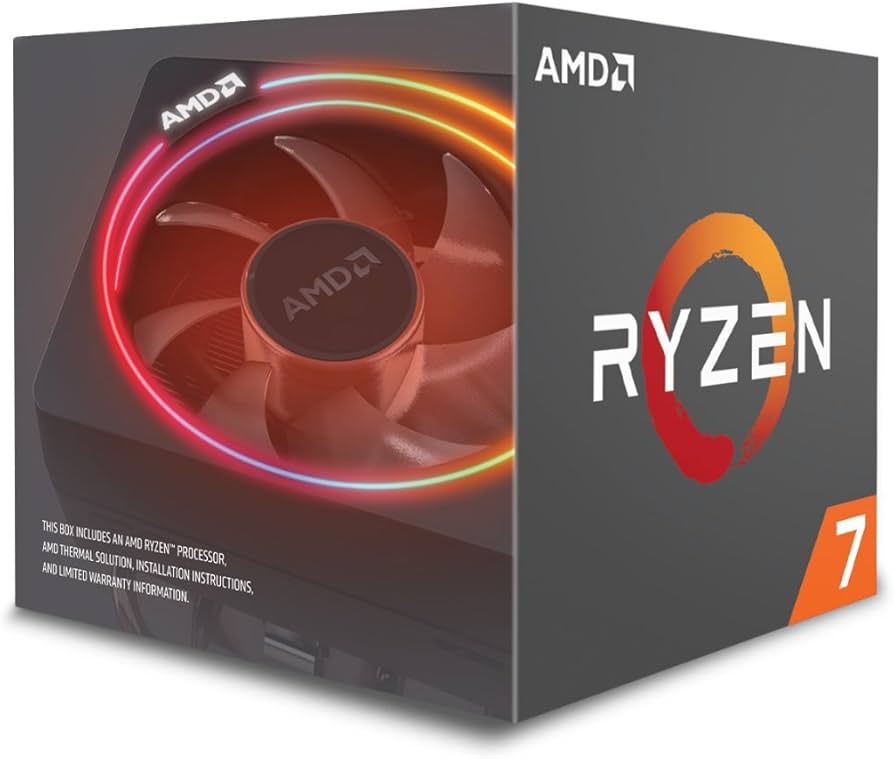
The AMD Ryzen 7 2700X continues to be a popular choice for budget-conscious PC builders even as we approach 2026. Released in 2018 as part of AMD’s second-generation Ryzen lineup, this 8-core processor has maintained a dedicated following among gamers and content creators looking for affordable performance.
While newer CPUs certainly outperform it in modern gaming scenarios, the 2700X still holds its own for multitasking and productivity workloads. The Ryzen 7 2700X delivers excellent value in 2026 for users who prioritize multi-threaded performance on a budget, offering 8 cores and 16 threads that can handle content creation and intensive multi-tasking efficiently. Benchmark comparisons to newer processors like the 5800X3D show that while gaming performance lags behind, the gap isn’t dramatic enough to necessitate an immediate upgrade for casual users.
The AM4 platform compatibility remains one of the 2700X’s strongest selling points, allowing users to potentially upgrade to much more powerful chips like the 5800X3D or 5950X without changing their motherboard. This upgrade path provides flexibility that continues to make the 2700X a sensible starting point for budget PC builds.
The Legend’s Last Stand: AMD Ryzen 7 2700X Review (2026 Edition)
In the fast-moving world of silicon, eight years is an eternity. Released in 2018, the AMD Ryzen 7 2700X was the “comeback kid” that solidified AMD’s place in the high-end market. But as we sit here in 2026, the landscape has changed. We are now seeing DDR5 as the aging standard, PCIe 6.0 on the horizon, and AI-accelerated processors becoming the norm.
Is this 8-core, 16-thread relic still worth a spot in your motherboard, or is it time to finally consign it to the recycling bin?
The Specs: A Trip Down Memory Lane
- Architecture: Zen+ (12nm)
- Cores/Threads: 8C / 16T
- Boost Clock: Up to 4.3 GHz
- TDP: 105W
- Socket: AM4 (The legendary long-lived socket)
- RAM Support: DDR4 (officially up to 2933MHz, though most hit 3200MHz)
Performance in 2026: The Reality Check
1. Productivity & General Use
In 2026, the 2700X remains a surprisingly capable “office warrior.” For web browsing with 50+ tabs, running Office 365, and streaming 4K video, it feels snappy. Having 16 threads means it doesn’t “choke” when you have background tasks running.
- Video Editing: For 1080p or light 4K social media clips, it’s fine. However, compared to modern chips with dedicated AV1 encoders and AI engines, export times are significantly longer.
- The Verdict: Excellent for a budget workstation or a student PC.
2. Gaming Performance
This is where the age shows. Modern AAA titles in 2026 are heavily optimized for high IPC (Instructions Per Clock) and larger L3 caches (like the X3D series).
- 1080p Gaming: You will face significant bottlenecks if you pair this with a modern mid-range GPU. While average frame rates might look okay, the 1% lows (stuttering) are noticeable in CPU-heavy games like Starfield 2 or Cyberpunk 2077 expansions.
- Competitive eSports: It still holds 144+ FPS in titles like Valorant or League of Legends, but it can no longer keep up with 360Hz or 500Hz monitors.
3. Windows Compatibility
As of 2026, Windows 10 is officially “End of Life” (as of Oct 2025). Fortunately, the Ryzen 2700X is on the supported list for Windows 11/12 because it features TPM 2.0. You are safe for security updates for now.
Guide: How to Get the Most Out of a 2700X in 2026
If you are still using this chip or found one for $30 on the used market, follow these steps to maximize its lifespan:
1. The “Fine Wine” RAM Tune
Zen+ performance is heavily tied to memory latency.
- The Goal: Don’t settle for the stock 2133MHz. Ensure your RAM is running at 3200MHz via the XMP/DOCP profile in the BIOS.
- Advanced: If you have a B450 or X470 board, try tightening the “Sub-timings” using the Ryzen DRAM Calculator. This can improve 1% lows in games by up to 10%.
2. Precision Boost Overdrive (PBO)
Don’t bother with manual all-core overclocking; it usually results in high heat for little gain. Instead:
- Enable PBO in the BIOS.
- Ensure you have a beefy cooler (the stock Wraith Prism is beautiful but loud and struggles in 2026’s heavier software environments). A cheap $20 tower cooler will outperform the stock one and allow the chip to boost longer.
3. The “Home Server” Pivot
If you’ve upgraded your main PC, the 2700X is the perfect candidate for a Home Server or NAS (Network Attached Storage).
- Its 8 cores are ideal for running Plex, a few Docker containers, or a Minecraft server.
- Underclock it and undervolt it to reduce power consumption, and it will run reliably for another five years.
The Verdict: Should You Buy It in 2026?
NO, if you are building a new gaming PC. Even a modern entry-level i3 or Ryzen 3 from the 2025/2026 era will likely outperform the 2700X in gaming due to massive leaps in single-core speed.
YES, if:
- It’s Ultra-Cheap: If you find a used 2700X for under $40, it’s an incredible value for a budget productivity machine.
- You are on an AM4 Life-Support Build: If you have an old A320 or B350 motherboard and a 1st Gen Ryzen (like a 1200), this is a cheap way to get 8 cores and Windows 11 compatibility.
- The Home Server Use Case: It remains one of the cheapest ways to get 16 threads for a home lab.
Final Score: 5/10 (as a primary CPU) | 9/10 (as a legacy/server CPU) The Ryzen 7 2700X was a titan of its time. While its “gaming” days are fading into the sunset, its multi-core legacy makes it a versatile tool for the budget-conscious user in 2026.
Key Takeaways
- The Ryzen 7 2700X remains a capable 8-core processor in 2026 for budget-conscious users focused on productivity tasks and light gaming.
- Users can enjoy a clear upgrade path on the AM4 platform, with the option to move to significantly faster processors like the 5800X3D without changing motherboards.
- While modern games benefit from newer CPU architectures, the 2700X still provides adequate performance for multitasking and content creation workloads.
Technical Specifications and Performance Analysis
The AMD Ryzen 7 2700X remains a notable processor that offers solid performance with its 8-core architecture and robust specifications. Despite being released years ago, it continues to serve as a capable CPU for various computing tasks.
Core Architecture and Clock Speeds
The Ryzen 7 2700X is built on AMD’s Zen+ architecture, which represented a refinement over the original Zen design. It features 8 cores and 16 threads, making it suitable for both gaming and productivity tasks. The processor comes with a base clock speed of 3.7 GHz and can reach up to 4.3 GHz through Precision Boost 2 technology.
The CPU includes 16MB of L3 cache, which helps improve performance in various applications. This cache size provides decent data access speeds for most workloads.
The 2700X also utilizes AMD’s Infinity Fabric interconnect, which facilitates communication between the processor components. This architecture supports FMA3 (Fused Multiply-Add) instructions, enhancing performance in specific computational tasks.
Overclocking Potential
The Ryzen 7 2700X is an unlocked processor, giving users the ability to push performance beyond factory settings. Many users have successfully achieved stable overclocks between 4.1-4.3 GHz across all cores with proper cooling.
When overclocking, voltage management becomes crucial. Most stable overclocks require between 1.35V to 1.45V, though staying under 1.4V is often recommended for long-term use.
Temperature management is essential when pushing the 2700X. The processor typically operates best under 85°C, with ideal performance occurring below 75°C. Aftermarket cooling solutions are recommended for serious overclocking attempts.
The Extended Frequency Range (XFR) feature also allows the processor to automatically exceed its rated boost clock when thermal and power conditions permit.
Comparative Benchmarks
In Cinebench R20, the 2700X typically scores around 3800-4000 points in multi-core tests, which is approximately 62% lower than newer options like the 7700X. In Cinebench R15, it generally achieves scores of about 1700-1800 points in multi-thread tests.
For gaming and general performance, the 2700X falls behind newer Ryzen generations. Recent benchmarks show that upgrading to a 5800X or 5800X3D would provide significant improvements while potentially using the same motherboard and RAM.
In Geekbench tests, the 2700X scores approximately 5000 points in multi-core workloads. For 3DMark Time Spy CPU tests, it typically scores around 9000-9500 points.
WPrime calculations show the 2700X completing the 1024M test in approximately 120-130 seconds, which is respectable but notably slower than current-generation processors.
Compatibility and Ecosystem
The AMD Ryzen 7 2700X thrives within a well-established ecosystem of hardware, making it a versatile choice for various computing needs. This processor’s compatibility extends across multiple chipsets, motherboards, and memory configurations while delivering solid performance for both gaming and productivity tasks.
Supported Chipsets and Motherboards
The Ryzen 7 2700X works best with AMD’s 400-series chipsets, particularly the X470 which was designed to maximize the processor’s capabilities. This premium chipset offers better power delivery, enhanced overclocking support, and more robust I/O options compared to B450 boards.
For users seeking budget-friendly options, B450 motherboards provide adequate support while sacrificing some premium features. The processor is also backward compatible with 300-series boards (X370, B350, A320) following a BIOS update, though these may limit the processor’s full potential due to less optimized power delivery.
When selecting a motherboard, consider factors like VRM quality for stable power delivery, especially important for utilizing all eight cores and sixteen threads under sustained loads. Premium X470 boards from manufacturers like ASUS, MSI, and Gigabyte provide the best overall experience with this processor.
Memory and RAM Compatibility
Memory compatibility is crucial for Ryzen 7 2700X performance as the processor’s Infinity Fabric architecture directly benefits from faster RAM. While the 2700X officially supports memory speeds up to 2933 MHz, many users successfully run 3200 MHz kits with stable performance.
For optimal results, look for memory kits validated for AMD Ryzen systems. These have been tested to work reliably with the platform’s memory controller. The processor benefits most from dual-channel configurations, so installing matched pairs of memory modules is recommended.
When choosing RAM, consider these specifications:
- Speed: 2933 MHz officially, 3200-3600 MHz with potential overclocking
- Capacity: 16GB minimum for gaming, 32GB for content creation
- Latency: Lower CL timings (CL14-16) provide better performance
Samsung B-die memory chips typically offer the best compatibility and performance with first and second-generation Ryzen processors.
Gaming and Workstation Performance
The Ryzen 7 2700X delivers strong gaming performance, particularly when paired with mid to high-end graphics cards. While single-core performance falls behind some Intel alternatives of its era, the eight cores and sixteen threads provide excellent multitasking capabilities during gaming sessions.
For 1080p gaming, the 2700X may experience some bottlenecking with the newest GPUs like the RTX 4060. However, at higher resolutions (1440p and 4K), where GPU limitations become more prominent, the processor performs admirably.
In workstation environments, the 2700X truly shines. Tasks like video editing, 3D rendering, and software compilation benefit significantly from the multi-threaded performance. The processor’s SenseMI technology also helps with efficiency during heavy workloads.
For users considering an upgrade path, newer Ryzen processors like the 5800X offer substantial performance improvements while maintaining compatibility with many of the same motherboards after a BIOS update.
Frequently Asked Questions
The Ryzen 7 2700X remains a capable processor even in 2025, with many users still finding value in this older CPU. Common questions about this processor focus on performance, compatibility, and value compared to newer options.
How does the Ryzen 7 2700X perform in comparison with the latest AMD CPUs?
The Ryzen 7 2700X shows its age when compared to AMD’s latest offerings. While it was a powerhouse in 2018 with its 8 cores and 16 threads, newer Ryzen processors deliver significantly better performance per core.
Modern games and applications that benefit from faster single-core speeds may experience limitations with the 2700X. However, for multi-threaded workloads, the processor still performs adequately.
Some users continue to pair the 2700X with modern graphics cards like the RTX 3090 and report satisfactory performance at high settings in most games.
What are the recommended motherboards compatible with the Ryzen 7 2700X?
The Ryzen 7 2700X works with AM4 socket motherboards, particularly B450, X470, and X570 chipsets. The B450 boards offer good value while X470 provides better overclocking capabilities.
For users building a system in 2025, finding new motherboards for this CPU may be challenging as manufacturers have focused on newer generations. Used or new old stock motherboards remain the best options.
When selecting a motherboard, ensure it has an updated BIOS that supports the 2700X, especially if purchasing an older model that might need an update.
Are there any new advancements or updates released for the Ryzen 7 2700X?
AMD no longer provides significant updates specifically for the 2700X as it focuses on newer generations. The last major BIOS and microcode updates were released several years ago.
Security patches and minor optimizations may still appear in motherboard BIOS updates. However, users should not expect performance-enhancing updates at this point in the CPU’s lifecycle.
The processor benefits from mature driver support and established troubleshooting resources due to its age and widespread adoption.
What is the impact of Ryzen 7 2700X’s specifications on its gaming performance?
The 2700X offers adequate gaming performance with its 8 cores and 16 threads, especially for games that can utilize multiple cores. Its base clock of 3.7GHz and boost of 4.3GHz provide sufficient processing power for most titles.
Some CPU-intensive games may experience frame rate variations, with reported drops from 144Hz in demanding scenarios. This variability becomes more noticeable in newer titles designed for more recent processors.
The processor works well with mid-range to high-end graphics cards, though the most powerful current GPUs might experience bottlenecking in certain scenarios.
Can the Ryzen 7 2700X be effectively utilized in a laptop configuration?
The Ryzen 7 2700X was designed exclusively for desktop systems and cannot be used in laptops. Its 105W TDP and physical size make it incompatible with laptop motherboards and cooling solutions.
AMD’s mobile offerings from the same era used different architectures optimized for power efficiency. Laptop users interested in similar performance should look at AMD’s mobile-specific processors.
Modern laptops use AMD’s newer mobile processors which offer better performance and efficiency than anything available when the 2700X was released.
What is the current market price for the Ryzen 7 2700X?
The Ryzen 7 2700X has significantly decreased in price since its launch. In the second-hand market, prices typically range from $70-120 depending on condition and included accessories.
New units, if still available, may command a premium due to their scarcity. However, purchasing a new 2700X rarely represents good value compared to newer alternatives.
For budget-conscious builders, the used market offers the best value, though upgrading to a newer generation Ryzen processor might be more cost-effective for long-term use.