
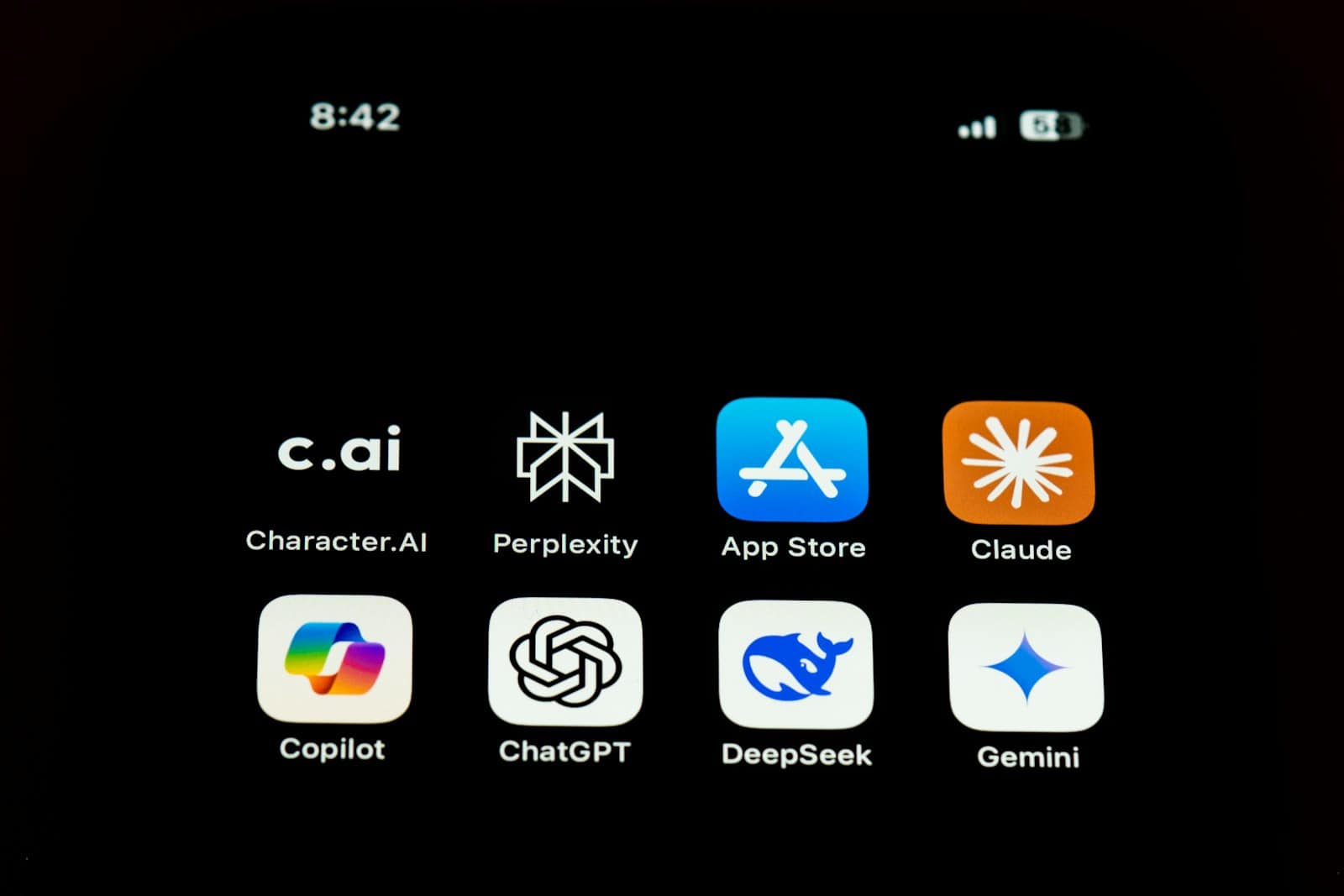
Artificial intelligence has changed the way we work and live. In 2026, AI apps have become essential tools for improving productivity, creativity, and daily tasks. The best AI apps stand out by offering practical solutions that seamlessly integrate into workflows while providing significant time savings and enhanced capabilities.
Finding the right AI tools can be challenging with so many options available. From chatbots and content generators to image creators and productivity assistants, the AI landscape continues to evolve rapidly. Many top AI tools now cover specific needs across various categories, helping users accomplish more with less effort.
1. ChatGPT
ChatGPT remains one of the best AI chatbots of 2025, maintaining its position as the original AI assistant that revolutionized how people interact with artificial intelligence. Developed by OpenAI, it offers powerful language capabilities for a variety of tasks.
The latest versions of ChatGPT use advanced models including GPT-4o and the newer o1 and o3 models. These improvements have enhanced its ability to understand complex requests and provide more accurate, helpful responses.
Users can access ChatGPT through multiple platforms. The official mobile app is free to download and conveniently syncs history across devices, allowing seamless transitions between phone and computer.
ChatGPT offers both free and premium subscription options. The free tier provides access to basic features, while ChatGPT Plus unlocks the most advanced models and improved response times.
Many professionals use ChatGPT daily for writing assistance, brainstorming ideas, coding help, and learning new concepts. Its versatility makes it valuable across numerous industries and personal applications.
One significant advantage of ChatGPT is its integration capabilities. When connected to automation tools like Zapier, users can access ChatGPT’s features directly within their favorite apps, streamlining workflows.
The interface is designed to be intuitive, resembling a simple chat conversation. This accessibility has contributed to its widespread adoption among both technical and non-technical users.
ChatGPT regularly receives updates that improve its performance and add new features. OpenAI actively works to reduce limitations and enhance the model’s capabilities over time.
While other AI chatbots have emerged in the competitive landscape, ChatGPT continues to be recognized as a top choice for general-purpose AI assistance in 2026.
2. Google Assistant
Google Assistant stands out as one of the most powerful AI personal assistants available today. It uses advanced natural language processing to understand and respond to voice commands effectively.
The assistant comes pre-installed on Android devices and can be downloaded on iOS through the App Store. This makes it accessible across multiple platforms for users regardless of their device preferences.
Google Assistant excels at answering questions, setting reminders, and providing directions through Google Maps integration. Users can ask for information about weather, news, or sports scores and receive accurate responses immediately.
One of the key advantages of Google Assistant is its seamless integration with other Google services. This connectivity allows users to check their calendar, send emails, or play music from YouTube Music with simple voice commands.
The assistant can also help manage smart home devices. Users can control lights, thermostats, and other compatible devices through voice instructions, making home automation simpler.
For productivity enthusiasts, Google Assistant offers features like setting timers, creating shopping lists, and sending text messages hands-free. These capabilities make daily tasks more efficient and convenient.
Recently, Google has transformed its assistant capabilities with the introduction of Gemini, a more advanced AI assistant built from the ground up. This represents an evolution in Google’s AI assistant technology.
The Google Gemini app expands on these capabilities, offering enhanced creativity and productivity tools completely free of charge. This official app takes Google’s assistant functionality to new levels.
Google Assistant continues to improve through regular updates, adding new features and refining existing ones. These improvements keep it competitive in the growing AI assistant market.
3. Grammarly AI
Grammarly AI stands out as one of the most useful writing tools available today. This intelligent assistant helps users improve their writing by checking grammar, spelling, and punctuation in real-time. The app works across multiple platforms, making it accessible wherever you write.
The AI writing assistant from Grammarly does more than just fix errors. It analyzes tone and provides suggestions to make your writing clearer and more effective. Users can prompt it for ideas and outlines when they’re stuck, helping to overcome writer’s block.
One major advantage is Grammarly’s integration with other applications. The tool works directly in email clients, word processors, and social media platforms. This seamless experience means writers don’t need to copy and paste their text to get feedback.
Mobile users benefit from the Grammarly keyboard app available for both Android and iOS devices. The keyboard provides real-time writing assistance as users type on their smartphones or tablets.
For Apple users, the iOS version works directly with iPhone and iPad apps without requiring copy and paste. This integration makes editing on mobile devices much more convenient.
Grammarly’s AI can also help adjust the tone of writing with a single click. This feature ensures messages are received as intended, which is particularly valuable in professional settings where communication clarity matters.
The free version of Grammarly offers substantial benefits, while premium tiers provide additional features for more demanding users. Writers of all skill levels find value in the platform’s personalized AI guidance.
Professional writers appreciate how Grammarly helps maintain consistency in longer documents. The tool identifies repetitive words and suggests synonyms to improve variety in writing.
4. DALL-E 3
DALL-E 3 stands as one of the most advanced AI image generators available today. Developed by OpenAI, this powerful tool has significantly improved upon previous versions with its enhanced ability to understand nuance and detail in user prompts.
The system excels at translating ideas into exceptionally accurate images, making it a top choice for creative professionals and casual users alike. It can interpret complex descriptions and generate corresponding visuals with remarkable precision.
Microsoft Designer’s Image Creator utilizes DALL-E 3’s technology, delivering the same high-quality results through a user-friendly interface. This integration makes the advanced AI accessible through familiar Microsoft applications.
DALL-E 3 particularly shines when incorporating AI-generated images into existing workflows. Its intuitive prompt system allows users to describe exactly what they want, and the AI delivers images that closely match these descriptions.
The technology has also made its way to mobile devices. iPhone users can access DALL-E 3’s capabilities through the AI Art DALL E Generator app, which transforms text descriptions into art, images, and even video content.
When compared to other popular AI image generators like Midjourney, DALL-E 3 offers different strengths. While both create impressive AI-generated images, DALL-E 3 often produces more literal interpretations of prompts with excellent text rendering capabilities.
The ease of use makes DALL-E 3 particularly appealing to newcomers in the AI image generation space. Users don’t need extensive technical knowledge to create stunning visuals, just a clear description of what they envision.
For businesses and content creators looking to incorporate AI imagery into their work, DALL-E 3 provides a reliable solution that balances quality, accuracy, and accessibility. Its capabilities continue to expand with ongoing development from OpenAI.
5. Midjourney
Midjourney stands as one of the leading AI image generators in 2026. This powerful tool consistently produces some of the best looking AI-generated images available today, making it a favorite among digital artists and designers.
The platform operates through a Discord interface, which creates a unique community experience. Users can view others’ creations, gaining inspiration and learning new techniques from fellow creators.
Midjourney describes itself as an independent research lab focused on exploring new mediums of thought and expanding human imagination. This philosophy shows in the quality and creative possibilities their tool offers.
When compared to other options like DALL-E 3, Midjourney typically offers more powerful capabilities. The trade-off comes in having a slightly steeper learning curve for beginners.
Several expert reviews have placed Midjourney at the top of their rankings. PCMag’s 2025 evaluation of AI image generators ranked Midjourney first among all competitors, highlighting its exceptional output quality.
The community aspect of Midjourney provides additional value beyond the technology itself. Users often share prompts and techniques, creating a collaborative environment for artistic development.
While each AI image generator has specific strengths, many users agree that Midjourney offers solid overall performance. The tool excels at creating detailed, artistic images with impressive lighting and texture.
Midjourney requires a subscription for regular use, with pricing tiers based on usage volume. This premium approach reflects the advanced technology behind their image generation algorithms.
6. Replika
Replika is a unique AI companion app that stands out in the crowded AI assistant market. It’s designed specifically to provide users with a personalized chat experience that feels more like talking to a friend than a digital assistant.
The app uses artificial intelligence to learn from conversations with users. Over time, it begins to mimic their texting style, creating a more personalized interaction experience.
Unlike productivity-focused AI tools, Replika positions itself as an AI friend. The emotional support aspect has made it popular with millions of users seeking a judgment-free space for conversation.
Replika’s interface is simple and focused on conversation. Users can chat with their AI companion through text, and the app maintains context surprisingly well throughout discussions.
The free version offers basic conversational features, while premium subscriptions unlock additional interaction options. Many users appreciate having a consistent companion available whenever they need someone to talk to.
One notable quality of Replika is its supportive and positive approach. The AI is programmed to be encouraging and understanding, making it appealing for those seeking emotional support.
While Replika may not have the comprehensive knowledge base of ChatGPT, some reviewers suggest it might be better for natural conversations. The focused design helps it excel specifically at being a conversation partner.
Available on both iOS and Android platforms, Replika makes AI companionship accessible to most smartphone users. The app continues to evolve with regular updates improving its conversational abilities.
For those seeking an AI that focuses less on information and more on connection, Replika offers a distinct alternative to general-purpose AI assistants. Its specialized focus on companionship fills a specific niche in the AI application landscape.
7. Lensa
Lensa is a popular AI-powered photo and video editing application available on both iOS and Android platforms. The app goes beyond traditional photo editing by offering advanced AI features that enhance selfies and portraits.
One of the standout features of Lensa is its ability to retouch portrait selfies with remarkable precision. Users can easily remove imperfections from their photos with just a few taps, creating polished images without extensive editing knowledge.
The app has gained significant attention for its Magic Avatar feature. This innovative tool trains a generative image model on a series of user selfies to create artistic avatars that transform ordinary photos into creative interpretations.
Unlike conventional photo editors, Lensa offers a fresh approach to image enhancement. The app replaces traditional filters with AI-powered tools that can analyze facial features and apply appropriate adjustments automatically.
Lensa works with both still photos and videos, making it versatile for various content creation needs. The intuitive interface makes complex editing accessible to users of all skill levels.
When considering Lensa, users should be aware of privacy considerations. Some users have raised concerns about the app’s terms, as it gives developers access to photos uploaded to the service. Reviewing the privacy policy before uploading personal images is advisable.
Lensa represents how AI is transforming creative tools for everyday users. The combination of sophisticated image processing technology with an accessible interface demonstrates the direction of modern AI photo editing applications.
For those seeking a powerful AI-based photo editor that specializes in portrait enhancement and creative transformations, Lensa provides a compelling option with its range of innovative features.
8. GitHub Copilot
GitHub Copilot stands out as one of the most powerful AI coding assistants available today. It functions as an AI pair programmer that assists developers by suggesting code completions as they type. The tool was developed through a collaboration between GitHub and OpenAI.
Developers using Copilot benefit from its ability to provide contextual code suggestions based on comments and existing code. It can complete lines of code, suggest entire functions, and even generate complex algorithms, saving programmers significant time and effort.
One of Copilot’s strengths is its customizability. The AI can adapt to a developer’s coding style and preferences over time. This means the suggestions become more personalized as the developer continues to use the tool.
The assistant works across numerous programming languages and integrates seamlessly with popular code editors. Visual Studio Code users particularly benefit from the tight integration, though Copilot also works with other environments.
Many developers who have been using Copilot since its initial release report high satisfaction with its capabilities. The tool continues to improve with regular updates and refinements to its underlying AI model.
For teams, Copilot can help standardize coding practices and reduce the learning curve for new project contributors. It serves as a knowledge base that encapsulates best practices and common patterns.
Copilot is designed to boost developer productivity by handling routine coding tasks. This allows programmers to focus their attention on solving complex problems rather than writing boilerplate code.
While not free, many developers find the subscription cost worthwhile due to the time savings and quality improvements it brings to their work. Organizations often see positive returns on investment through increased development speed.
9. Phind
Phind is an AI-powered search engine that creates detailed, visual answers for various questions. It stands out particularly in technical fields and coding tasks.
Users on platforms like Reddit have noted that Phind excels with complex coding challenges, offering comprehensive breakdowns from basic syntax to full methods. The tool provides complete solutions that include necessary statements, methods, and even CSS when applicable.
The service recently upgraded to Phind-405B, enhancing both the quality and speed of its responses. This improvement maintains Phind’s reputation for delivering high-quality technical answers with relevant reference links.
When compared to similar tools like Perplexity, Phind shows particular strength with its larger context window, allowing it to handle more complex queries and programming tasks. This feature makes it especially valuable for developers tackling intricate problems.
The interface includes rich, interactive elements that enhance the user experience. These features help present information in an accessible way, particularly helpful when dealing with technical subjects that might otherwise be challenging to understand.
For those seeking coding assistance, Phind has earned recognition as one of the most detailed AI tools available in 2024. Its thorough explanations and contextual understanding help programmers solve problems efficiently.
Many developers now regularly incorporate Phind into their workflow, using it to troubleshoot code issues, learn new programming concepts, or generate efficient solutions to technical challenges.
10. Lexica AI
Lexica AI stands out as a powerful tool in the AI image generation space. The platform offers state of the art AI image generation capabilities that allow users to create stunning visuals with simple prompts.
Users appreciate Lexica for its intuitive interface and high-quality output. The service enables creation of detailed images across various styles and concepts, making it accessible for both beginners and experienced creators.
One of Lexica’s strengths is its ability to generate 4K quality images that can be used for multiple purposes. From digital marketing materials to creative projects, the outputs maintain impressive detail and clarity.
The platform includes a vast library of pre-existing images that serve as inspiration. This feature helps users understand the potential of the tool and provides examples of successful prompts.
For creative professionals, including those in retirement, Lexica offers an accessible entry point into AI art creation. The straightforward approach removes technical barriers that might otherwise discourage new users.
Lexica also supports specialized requests, such as app icon creation and branding materials. This versatility makes it valuable for professionals across different industries who need visual assets.
The search function within Lexica helps users find specific styles or concepts quickly. This streamlines the creative process and allows for more efficient workflow when developing multiple images.
For teams working on digital products, Lexica provides consistent quality that maintains brand standards. The ability to specify colors and design elements ensures visual coherence across projects.
Understanding AI Applications
Artificial intelligence is revolutionizing how we interact with mobile applications. These smart tools use advanced algorithms to learn from user behavior and provide personalized experiences.
What is an AI App?
An AI app is software that uses artificial intelligence technologies to perform tasks that typically require human intelligence. These applications leverage machine learning, natural language processing, and computer vision to deliver smart, responsive experiences.
AI apps can recognize patterns, make decisions, and improve over time through continued use. Unlike traditional apps, they adapt to user preferences and behaviors.
Many top AI tools in 2025 span across different categories, serving various purposes from content creation to productivity enhancement.
Common features of AI apps include:
- Personalized recommendations
- Voice and image recognition
- Predictive text and suggestions
- Automated task completion
- Real-time language translation
How AI is Transforming Mobile Applications
AI technology has fundamentally changed the mobile app landscape by making applications smarter and more intuitive. Developers now integrate AI capabilities to create responsive experiences that adapt to individual users.
AI productivity tools have become essential for many professionals, helping with everything from content creation to text enhancement. These tools save time by automating repetitive tasks and offering intelligent suggestions.
AI has also enhanced communication apps through smart replies, voice assistants, and real-time translation. These features make interactions more efficient and accessible.
In education, AI language learning apps provide personalized learning paths and immediate feedback, making language acquisition more effective and engaging.
The gaming industry has also embraced AI for creating more dynamic and responsive gameplay experiences with adaptive difficulty levels.
Key Features of the Best AI Apps
The most effective AI applications combine sophisticated technology with intuitive design to deliver exceptional user experiences. These features work together to make complex AI capabilities accessible and valuable to everyday users.
Advanced Machine Learning Algorithms
AI productivity tools leverage cutting-edge machine learning algorithms to perform complex tasks with minimal human input. These algorithms enable apps to recognize patterns, learn from user behavior, and make intelligent predictions.
The best AI apps employ natural language processing (NLP) to understand and generate human-like text. This technology powers popular AI chatbots like ChatGPT that can answer questions, write content, and provide assistance across various domains.
Many top applications also feature:
- Computer vision algorithms that can analyze and interpret visual data
- Recommendation systems that personalize content based on user preferences
- Adaptive learning capabilities that improve performance over time
These sophisticated algorithms work behind the scenes to create experiences that feel magical to users, whether they’re generating art, translating languages, or automating repetitive tasks.
User-Friendly Interface Design
Even the most powerful AI technologies are worthless if users can’t effectively interact with them. Top AI tools in 2026 prioritize clean, intuitive interfaces that make advanced capabilities accessible to everyone.
The best designs include:
- Simple, conversational inputs that don’t require technical expertise
- Clear visual feedback showing how the AI interprets requests
- Customizable settings that adapt to different user preferences
- Transparent explanations of how AI-generated results were created
Many successful AI apps also implement progressive disclosure techniques. These interfaces initially present only basic options but reveal more advanced features as users become more comfortable.
Thoughtful onboarding experiences guide new users through key features without overwhelming them. This might include interactive tutorials, tooltips, or example prompts that demonstrate the AI’s capabilities.
Frequently Asked Questions
AI applications continue to evolve rapidly, offering powerful tools for various needs. Users frequently seek information about the best options available across different platforms and use cases.
What are the top-rated AI applications available for free?
Several high-quality AI applications are available without cost. ChatGPT offers a robust free tier that provides access to its conversational AI capabilities.
Google Assistant remains one of the most accessible free AI tools, coming pre-installed on Android devices and available for download on iOS.
Basic versions of Grammarly AI can be used without payment, offering essential writing assistance and grammar checking functionalities.
Which AI chatbot applications are recommended by experts on forums such as Reddit?
Reddit discussions frequently mention ChatGPT Plus as a superior option for most use cases. Many users praise its versatility and depth of knowledge.
You.com has gained popularity for general AI search queries, while ChatGPT4 receives specific praise for coding tasks and in-depth analysis.
Regie.ai has emerged as a recommended tool specifically for sales professionals looking to leverage AI in their workflow.
What is the most advanced AI app for iPhone users as of now?
Answer.AI stands out as a sophisticated educational AI application for iPhone users. This award-winning app was created by educators to enhance comprehension and critical thinking skills.
ChatGPT’s iOS app provides full access to OpenAI’s advanced language models, with premium subscribers gaining access to GPT-4’s capabilities.
DALL-E 3 integration in various iPhone apps offers cutting-edge AI image generation capabilities previously unavailable on mobile platforms.
Can you list the leading AI applications for Android devices?
Replika has become a popular AI companion app for Android, learning from interactions to personalize conversations.
Wysa offers mental health support through an AI-powered chatbot specifically designed for emotional wellbeing.
Google’s suite of AI tools works seamlessly on Android, providing integrated experiences across Google Assistant, Google Lens, and Google Photos.
What are the foremost AI tools currently being used by students for educational purposes?
Answer.AI functions as an AI tutor designed to boost confidence and strengthen critical thinking for students at various educational levels.
ChatGPT has become a popular research assistant for students, helping with explanations of complex topics and providing additional learning resources.
Grammarly AI assists students with writing assignments, offering suggestions for clarity, grammar, and style improvements that help develop better communication skills.
Have any new applications surpassed ChatGPT in terms of performance or popularity?
While ChatGPT remains dominant, competition in the AI chatbot space is intensifying. Several specialized AI tools outperform ChatGPT in specific domains.
Midjourney has established superiority in realistic image generation, creating visuals that often surpass DALL-E’s capabilities in artistic contexts.
Domain-specific AI tools like GitHub Copilot for coding or Jasper for marketing content creation often deliver better results than general-purpose AI in their specialized areas.