Grand strategy games offer a unique gaming experience that combines complex decision-making with long-term planning across military, economic, and diplomatic fronts. These games typically span large time periods and geographic areas, allowing players to control entire nations or empires rather than individual units. The best grand strategy games balance accessibility with depth, providing newcomers with clear entry points while offering veterans intricate systems to master.
The genre has evolved significantly in recent years, with developers creating increasingly sophisticated experiences that blend historical accuracy with engaging gameplay. Modern grand strategy titles often feature detailed maps, complex AI opponents, and multiple victory paths that extend beyond simple military conquest. Whether set in historical settings, fantasy worlds, or the far reaches of space, these games challenge players to think several moves ahead while adapting to changing circumstances.
1. Stellaris
Stellaris is a space-themed grand strategy game developed by Paradox Interactive that blends 4X gameplay with traditional grand strategy elements. Released in 2016, it has established itself as one of the most accessible entries in the genre for newcomers.
Unlike many complex grand strategy titles, Stellaris offers a gentler learning curve while still providing depth. Many players consider it the easiest Paradox game to get into, making it ideal for those new to the genre.
The game is set in space, allowing players to create custom alien civilizations or choose from pre-made options. This setting provides tremendous variety in gameplay experiences, as each playthrough can feel dramatically different from the last.
Stellaris runs in real-time with pause options, giving players control over the game’s pace. This system strikes a balance between thoughtful strategy and engaging moment-to-moment gameplay.
What makes Stellaris stand out is its less deterministic nature compared to other Paradox titles. The variety of civilizations and scenarios players can experience contributes to its popularity and replayability.
Critics have praised Stellaris for finding the sweet spot between 4X and grand strategy gameplay. This balance helps it appeal to fans of both genres without sacrificing depth.
The game has received significant post-launch support with numerous expansions and updates. Players can access all additional content through the Stellaris Expansion Subscription, providing the complete experience without purchasing each DLC separately.
Some players compare Stellaris favorably to other space strategy games, calling it a better, more modern version of Sword of the Stars or a mix between Sins of a Solar Empire and Civilization. These comparisons highlight its successful blend of different strategy game elements.
2. Crusader Kings III
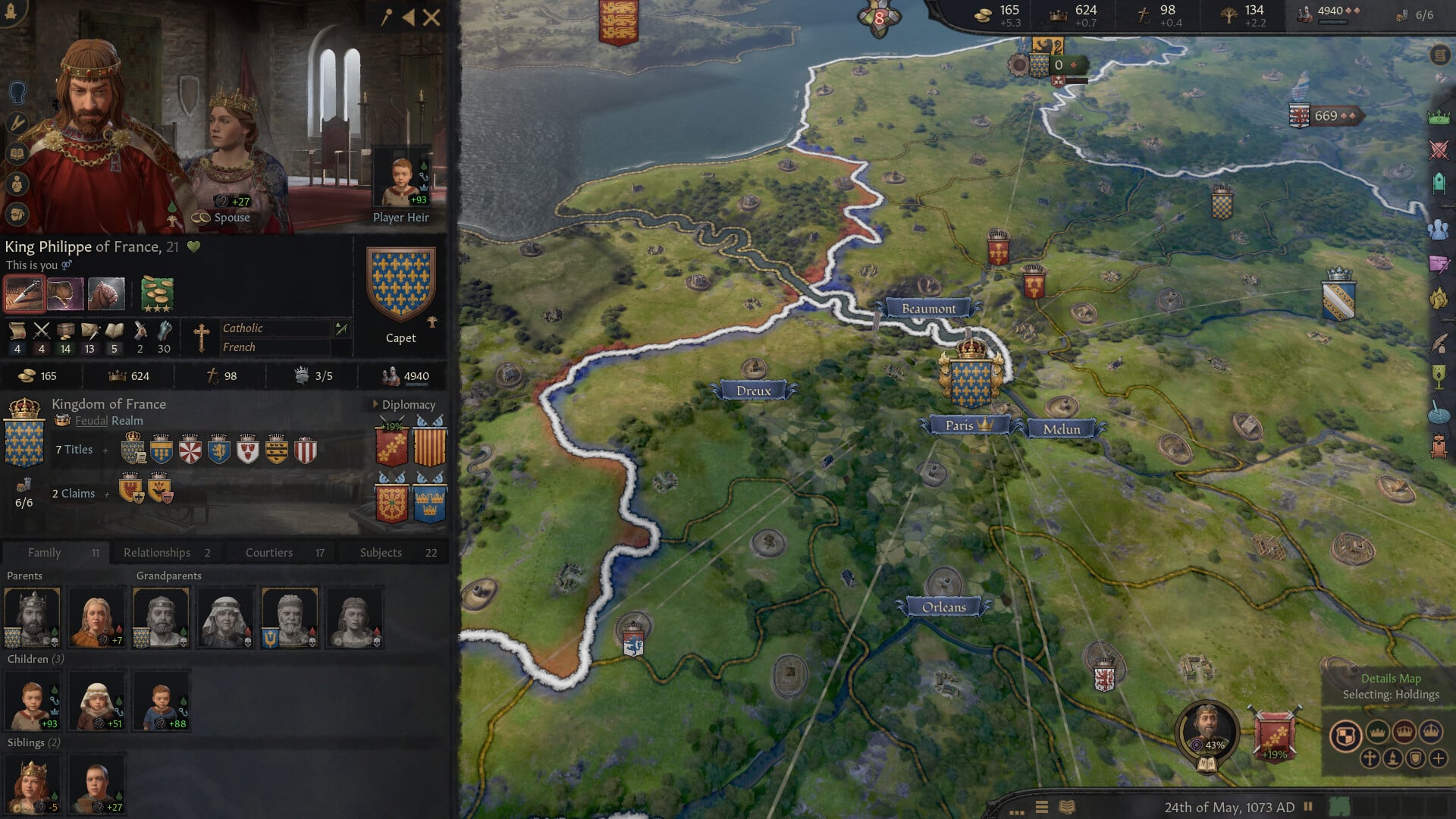
Crusader Kings III stands as a pinnacle in the grand strategy genre, blending deep strategic gameplay with rich role-playing elements. Released by Paradox Interactive, this medieval dynasty simulator allows players to guide their noble house through centuries of European history.
Unlike other strategy games that focus primarily on empire-building, Crusader Kings III puts character relationships and personal dramas at the forefront. Players manage marriages, form alliances, and navigate complex political landscapes while dealing with unique character traits and events.
The game’s depth comes from its intricate systems that simulate medieval life with remarkable detail. From religious conflicts to succession crises, each playthrough creates unique stories that emerge organically from gameplay decisions.
For newcomers to the grand strategy genre, Crusader Kings III offers a surprisingly accessible entry point. The robust tutorial system guides players through basic mechanics, with helpful tooltips explaining complex concepts.
What sets this title apart is its character-driven approach. Rather than simply controlling a faceless nation, players become deeply invested in their rulers’ personal journeys, from ambitious young heirs to aging monarchs facing mortality.
The game excels at creating memorable moments through its event system. Random occurrences based on character traits and historical contexts can dramatically alter gameplay, ensuring no two campaigns feel identical.
Critics and fans alike praise Crusader Kings III for striking a balance between strategic depth and role-playing elements. This unique approach has earned it a dedicated following among strategy enthusiasts.
With regular updates and expansions, Paradox continues to enhance the game experience. New features and historical scenarios provide fresh challenges even for veteran players who have spent hundreds of hours building their dynasties.
The game’s modding community further extends its longevity, creating alternative historical scenarios, fantasy conversions, and gameplay enhancements that transform the base experience in creative ways.
3. Hearts of Iron IV
Hearts of Iron IV is a World War II grand strategy game developed by Paradox Interactive. Released in 2016, it allows players to control any nation during the tumultuous period from 1936 to 1948.
The game focuses on military strategy, political maneuvering, and resource management. Players must balance industrial production, technological research, and diplomatic relations while commanding armies, navies, and air forces.
Hearts of Iron IV might not be the best starting point for newcomers to grand strategy games. Some players on Reddit consider it challenging for beginners due to its complexity compared to other titles in the genre.
The game features detailed combat mechanics including division design, battle planning, and supply logistics. These systems create a realistic simulation of warfare during this historical period.
Political gameplay allows players to choose different ideological paths. Nations can embrace democracy, fascism, communism, or non-aligned governance, each with unique national focus trees and gameplay opportunities.
Steam describes Hearts of Iron IV as a game that challenges strategic abilities and political insight. The depth of its systems rewards careful planning and adaptability as world events unfold.
Some critics argue that Hearts of Iron IV leans more toward being an arcade strategy game rather than true grand strategy. However, many fans praise its accessibility while maintaining strategic depth.
The game continues to receive expansions and updates, with DLCs like “No Step Back” enhancing the experience. These additions have helped maintain its popularity years after release.
Hearts of Iron IV particularly excels in its modding community. Total conversion mods like Kaiserreich and Millennium Dawn offer completely new scenarios and timelines to explore.
4. Europa Universalis IV
Europa Universalis IV stands as one of the most detailed grand strategy games available today. Released by Paradox Interactive, this game lets players control a nation from 1444 to 1821, navigating through complex historical events and diplomatic challenges.
The game is known for its exceptional depth and realistic approach to nation management. Players handle everything from trade and economics to warfare and colonization, creating a truly immersive experience.
While newcomers might find it intimidating at first, the learning curve is worth the effort. Many consider EU4 to be the most detailed and complex grand strategy game with historical foundations focused on Europe and the wider world.
The game shines in its diplomatic systems and economic modeling. Nations feel distinct from one another, with unique national ideas and mission trees that create varied gameplay experiences.
EU4’s map is impressively detailed, spanning the entire globe. This allows players to explore historical scenarios like the colonization of the Americas or the rise and fall of empires in Asia.
Despite its complexity, dedicated players find that EU4 rewards them with unparalleled strategic depth. The game has also received numerous expansions over the years, adding new mechanics and improving existing ones.
For those considering grand strategy games, it should be noted that while EU4 appears complex, it’s actually quite accessible once players grasp the basic concepts. Other titles like Stellaris or Crusader Kings III might be easier starting points, but EU4 offers greater historical accuracy.
The game’s real-time strategy approach differentiates it from turn-based alternatives. This creates a constantly evolving world where players must adapt to changing circumstances rather than planning moves in isolation.
5. Total War: WARHAMMER III
Total War: WARHAMMER III represents the culmination of Creative Assembly’s fantasy strategy trilogy. Released in February 2022, it brings together years of development and gameplay refinement to create an expansive strategic experience.
The game blends turn-based empire management with real-time tactical battles in the Warhammer Fantasy universe. Players can choose from diverse factions including Kislev, Cathay, and the four Chaos Gods, each with unique units and mechanics.
One of the game’s most significant features is the Immortal Empires campaign. This massive mode combines all content from the trilogy into one enormous strategic playground where players can command any faction from all three games.
The Realm of Chaos campaign offers a more narrative-focused experience. Here, players race to rescue or capture a bear-god while navigating through the Chaos Realms, facing unique challenges and mechanics not seen in previous titles.
Battle mechanics have been refined with improvements to sieges, minor settlement battles, and diplomacy options. The game introduces survival battles where players must hold position against waves of enemies while capturing points and building defenses.
Despite some debate about whether it’s truly a strategy game in the traditional sense, WARHAMMER III has earned its place among the top strategy titles available today.
The game continues to evolve through regular DLC releases and updates. These add new legendary lords, units, and gameplay mechanics that keep the experience fresh for both new and returning players.
With its combination of deep strategic elements, tactical battles, and rich fantasy lore, Total War: WARHAMMER III delivers a grand strategy experience of impressive scale and ambition.
6. Sid Meier’s Civilization VI
Civilization VI stands as one of the most popular 4X strategy games available today. Released as the sixth major installment in the long-running series, it continues the tradition of allowing players to build an empire that stands the test of time.
The game introduces several innovative features that set it apart from previous entries. Cities now physically expand across the map through a district system, creating more strategic depth in urban planning. This departure from the “one-city-one-tile” approach gives players new ways to customize their civilizations.
In Civilization VI, players can achieve victory through multiple paths including Science, Culture, Domination, Religion, and Diplomacy. Each civilization comes with unique units, buildings, and abilities that reflect their historical strengths.
The game’s active research system in technology and culture unlocks new potential as players progress through different eras. This system rewards players for gameplay actions that align with their research goals, creating a more intuitive progression.
AI leaders in Civilization VI pursue agendas based on their historical traits, making diplomacy more dynamic and challenging. These personality-driven interactions add depth to international relations throughout the game.
While some players prefer earlier entries like Civilization IV, Civilization VI has established itself as a worthy addition to the franchise. Its accessibility makes it an excellent entry point for those new to grand strategy games.
The game continues to receive support through expansions and updates, adding features like natural disasters, loyalty systems, and enhanced diplomatic options. These additions have addressed many criticisms of the base game.
For those comparing grand strategy options, Civilization VI frequently appears alongside titles like Europa Universalis IV and Crusader Kings III in discussions about the genre’s best offerings. Its turn-based approach and intuitive systems make it more approachable than some of its more complex competitors.
7. Supremacy 1914
Supremacy 1914 stands as one of the most respected grand strategy games focusing on World War I. Players take control of a nation during this pivotal historical period, managing resources, forming alliances, and engaging in tactical warfare across persistent maps.
The game offers multiple map sizes to accommodate different playstyles and time commitments. The 500-player map is widely considered the best game mode, requiring significant time investment, planning, teamwork, and strategic skill.
What separates Supremacy 1914 from other strategy titles is its real-time gameplay that unfolds over weeks or even months. Each decision has long-term consequences, creating a deeply immersive experience.
Economic management forms a crucial element of gameplay. Players must carefully balance resource production, trade, and military expenditures to maintain a functioning war economy.
The diplomatic aspects are equally important. Forming coalitions, maintaining alliances, and engaging in espionage can sometimes prove more valuable than direct military confrontation.
As one of the biggest WW1 strategy games available, it offers province conquest, alliance building, and economic development on persistent maps that evolve based on player actions.
Players can develop different approaches to victory. Some prefer aggressive early-game tactics focused on rapid expansion, while others adopt defensive postures, building economic strength before military campaigns.
Supremacy 1914 has successfully transitioned to mobile platforms while maintaining its strategic depth. Available on iOS and Android, it allows players to check in on their empires throughout the day, making decisions that will impact their long-term campaign.
The game continues to rank among the best grand strategy games in 2026, appealing to players who appreciate historical settings and complex strategic gameplay that rewards patience and careful planning.
8. Call of War: World War II
Call of War is a real-time strategy game set in the World War II era that gives players the opportunity to rewrite history. This WW2 strategy game can be played online through browsers or on mobile devices without requiring downloads.
The game pits players against real opponents in multiplayer matches that unfold across historically accurate maps. Players must make strategic decisions about resource management, troop deployment, and diplomatic relations with other nations.
For those who enjoy grand strategy titles with realistic elements, Call of War offers extensive gameplay with numerous functions and unit types. Players can choose from different nations, each with unique strengths and challenges.
The mobile version of Call of War is available on iOS devices through the App Store, making strategic gameplay accessible for gaming on the go. The touch interface has been optimized for smaller screens without sacrificing the depth of gameplay.
What sets Call of War apart from other strategy games is its balance between accessibility and depth. New players can quickly learn the basics, while experienced strategists will appreciate the nuanced systems.
The game progresses in real-time, with matches potentially lasting days or weeks. This pacing allows for thoughtful decision-making rather than rushed actions. Players must consider long-term consequences of their military and economic choices.
Unit variety in Call of War spans the technological developments of the WW2 era. From basic infantry to advanced aircraft and naval vessels, players have access to historically relevant military assets.
Alliance formation represents another key aspect of gameplay. Diplomatic relations with other players can lead to powerful coalitions or devastating betrayals, adding a human element to the strategic challenge.
9. Age of Wonders 4
Age of Wonders 4 stands as a remarkable entry in the 4X strategy genre, though some debate exists about whether it truly qualifies as a grand strategy game. Released in 2023, it combines strategic empire building with deep tactical combat that approaches wargame level complexity.
The game allows players to rule a fantasy realm entirely of their own design. This creative freedom extends to customizing your faction, choosing from various racial traits, and developing unique magical abilities that evolve throughout your campaign.
Age of Wonders 4 features the series’ signature blend of 4X strategy and turn-based tactical combat. Players must explore magical realms while managing resources, conducting diplomacy, and engaging in strategic warfare across varied landscapes.
One of the game’s strengths is its accessibility despite its depth. It runs well even on modest hardware, with many players reporting it performs adequately even on lower-end systems.
The scenario maps offer concentrated gameplay experiences that function like mini-campaigns. Each map contains unique objectives and discoveries including ancient wonders, special items, and distinctive challenges.
The game’s storytelling elements have received praise, with some critics including it among the strategy games with compelling narratives. These story elements are woven throughout both the main campaign and individual scenarios.
Currently available on Steam, Age of Wonders 4 frequently receives discounts, making it an accessible entry point for fans of fantasy strategy games. The Steam store page highlights the game’s mix of empire management and tactical combat.
While it might not fit the traditional grand strategy mold precisely, Age of Wonders 4 delivers deep strategic gameplay with fantastical elements that many genre fans find compelling. Its blend of customization, tactical depth, and strategic choices makes it worthy of consideration for strategy enthusiasts.
10. Victoria 2
Victoria 2 is widely regarded as one of the most complex yet rewarding grand strategy games ever created. Released by Paradox Interactive, it focuses on the Victorian era from 1836 to 1936, a time of rapid industrialization and colonial expansion.
The game stands out for its intricate economic simulation. Players manage their nation’s economy through factories, resources, and a population system that feels genuinely alive. Many players find watching these numbers go up surprisingly engaging.
Politics plays a crucial role in Victoria 2. Players navigate ideological movements, political reforms, and social changes that shaped the 19th century. The game challenges players to balance conservative stability against progressive reforms.
The diplomatic and military aspects shouldn’t be overlooked. Nations can form alliances, build spheres of influence, and wage wars of conquest or liberation. Colonial expansion into Africa and Asia becomes a major focus in the mid-game.
Victoria 2 offers diverse gameplay experiences depending on your chosen nation. You might industrialize Germany, expand America westward, or attempt to modernize a non-western power like Japan. Austria is particularly popular for offering a complete Victoria 2 experience.
For players looking to expand their empires, the game offers strategic colonial targets. Regions like Sumatra, Java, and Borneo make excellent imperial acquisitions.
The learning curve is admittedly steep, but the depth of its systems rewards patient players. Few strategy games capture the dramatic societal transformations of the 19th century so effectively.
Understanding Grand Strategy Games
Grand strategy games offer players control over nations, empires, or civilizations through complex systems of diplomacy, warfare, economics, and technological development. These games typically unfold over long time periods and require thoughtful planning rather than quick reflexes.
Core Elements of Gameplay
Grand strategy games are defined by several key mechanics that set them apart from other strategy genres. Resource management sits at the heart of gameplay, requiring players to balance materials, population, and wealth to build their empire. Players must make strategic decisions about expansion, alliance formation, and technological advancement that have far-reaching consequences.
Most grand strategy titles feature complex diplomacy systems allowing players to form alliances, declare wars, or establish trade agreements. Unlike real-time strategy games, grand strategy titles typically use turn-based or continuous-time systems where planning outweighs quick reflexes.
The map scale in these games is often continental or global, giving players a true “grand” perspective. Many games include deep simulation elements that model economic systems, population dynamics, and political movements.
History and Evolution
The grand strategy genre traces its roots to tabletop wargames of the 1950s and 1960s. Early computer adaptations appeared in the 1980s with titles like Civilization pioneering many core concepts that define the genre today.
The 1990s saw significant evolution with games like Europa Universalis introducing more complex political and economic systems. Paradox Interactive emerged as a leading developer in the early 2000s, creating historically detailed games covering various time periods.
Recent years have seen the genre become more accessible while maintaining depth. Modern titles like Stellaris and Crusader Kings have introduced character-driven narratives and role-playing elements to the traditional formula.
The genre continues to evolve in 2026 with new titles incorporating improved AI, better user interfaces, and innovative mechanics to attract both veterans and newcomers alike.
Key Factors in Evaluating Grand Strategy Games
When looking for the best grand strategy games, players should consider several important elements that define quality and enjoyment in this complex genre. These games require careful evaluation of their depth and long-term value.
Complexity and Depth
Grand strategy games stand apart from typical strategy titles by operating on a much larger scale. Paradox Interactive uses “Grand Strategy” as a marketing term to describe their distinctive approach to strategy gaming, which typically involves more complex systems than standard entries in the genre.
The best grand strategy games balance complexity without overwhelming new players. They provide meaningful choices about economic management, diplomatic relations, military conquest, and technological advancement.
Players should look for games with:
- Intuitive UI: Complex systems need clear presentation
- Adequate tutorials: Learning tools that introduce mechanics gradually
- Historical accuracy: Where appropriate for the setting
- Strategic options: Multiple viable paths to victory
Grand strategy games often feature distinctive “core” gameplay elements. These key mechanics should provide depth while remaining accessible enough for players to master over time.
Replayability
A hallmark of excellent grand strategy games is their ability to provide unique experiences across multiple playthroughs. The best titles in this genre offer substantial replayability through varied starting conditions and multiple paths to victory.
Modern grand strategy games often include:
- Multiple factions/civilizations: Each with unique bonuses and playstyles
- Random map generation: Creating new strategic landscapes
- Event systems: Providing unexpected challenges and opportunities
- Robust modding support: Extending gameplay through community content
The best grand strategy games balance economic management with exploration and conquest. Players should consider what setting appeals to them – historical, fantastical, or science fiction – as these shape the overall experience.
For newcomers to the genre, experts recommend the “one hour rule” – commit to playing for at least one hour before deciding if a game is right for you. This helps overcome the initial learning curve.
Frequently Asked Questions
Grand strategy games offer complex gameplay with deep mechanics and strategic decision-making. Players often have questions about which titles to try first and what makes these games stand out from other strategy genres.
What are the top-rated grand strategy games for PC?
The PC platform remains the primary home for grand strategy games, with several standout titles consistently receiving high ratings. Stellaris is widely praised for its space exploration and empire-building, despite having numerous DLCs.
Crusader Kings III has revolutionized the medieval strategy experience with its character-focused gameplay and dynasty management systems. The game’s intricate political machinations and role-playing elements set it apart from other titles.
Europa Universalis IV consistently ranks among the best historical strategy games, offering players control of nations during the early modern period. Its depth of diplomatic options and trade mechanics have made it a benchmark in the genre.
Which grand strategy games offer the best experience on mobile platforms?
Mobile grand strategy games typically offer streamlined interfaces while maintaining core strategic elements. Rome: Total War and its sequels have been successfully ported to tablets and phones with thoughtfully redesigned controls.
Civilization VI provides an excellent mobile experience that closely matches its PC counterpart, especially on tablets. The turn-based nature of the game works well with touch controls.
Polytopia offers a more accessible grand strategy experience designed specifically for mobile devices. Its simplified 4X gameplay makes it perfect for strategy on the go.
What are the recommended grand strategy games for a beginner to the genre?
For newcomers to grand strategy, certain titles offer more accessible entry points. Stellaris is often recommended for beginners due to its intuitive interface and gradual introduction of complex mechanics.
Total War: WARHAMMER III blends traditional real-time battles with strategic campaign elements, making it easier for new players to grasp fundamental concepts. The fantasy setting also helps engage players who might be intimidated by historical accuracy.
Hearts of Iron IV offers extensive tutorials and can be played at various difficulty levels. The game’s focus on World War II provides a familiar historical context for many new players.
Can you list the grand strategy games that are highly regarded as all-time classics?
Several titles have earned enduring reputations as genre-defining classics. Victoria 2 is considered a classic for its detailed economic and political systems during the Victorian era.
Europa Universalis III revolutionized historical grand strategy with its comprehensive nation management systems. Many of its innovations continue to influence modern strategy games.
The original Medieval: Total War and Shogun: Total War titles established foundations for blending turn-based strategy with real-time tactical battles. These games created the template for the entire Total War series.
What are the key features of a successful 4X grand strategy game?
Successful 4X strategy games share several essential elements that keep players engaged. Deep research trees that allow players to customize their civilization’s development path are crucial for providing meaningful strategic choices.
Varied victory conditions enable different playstyles and strategies to be viable. This ensures replayability as players can pursue diplomatic, military, economic, or cultural dominance.
Effective resource management systems create interesting decisions and trade-offs. The best 4X games balance complexity with accessibility in their economic modeling.
Which grand strategy titles are currently popular among the gaming community on Reddit?
The Reddit community actively discusses several prominent strategy titles. Stellaris remains highly popular on Reddit with regular discussions about strategies, mods, and upcoming content.
Crusader Kings III has a devoted following that shares stories of their dynasty’s achievements and failures. The game’s emergent narrative and role-playing elements generate unique player experiences worth sharing.
Hearts of Iron IV’s extensive modding community keeps the game fresh with total conversions and alternate history scenarios. Discussions about historical accuracy and strategy are common on dedicated subreddits.