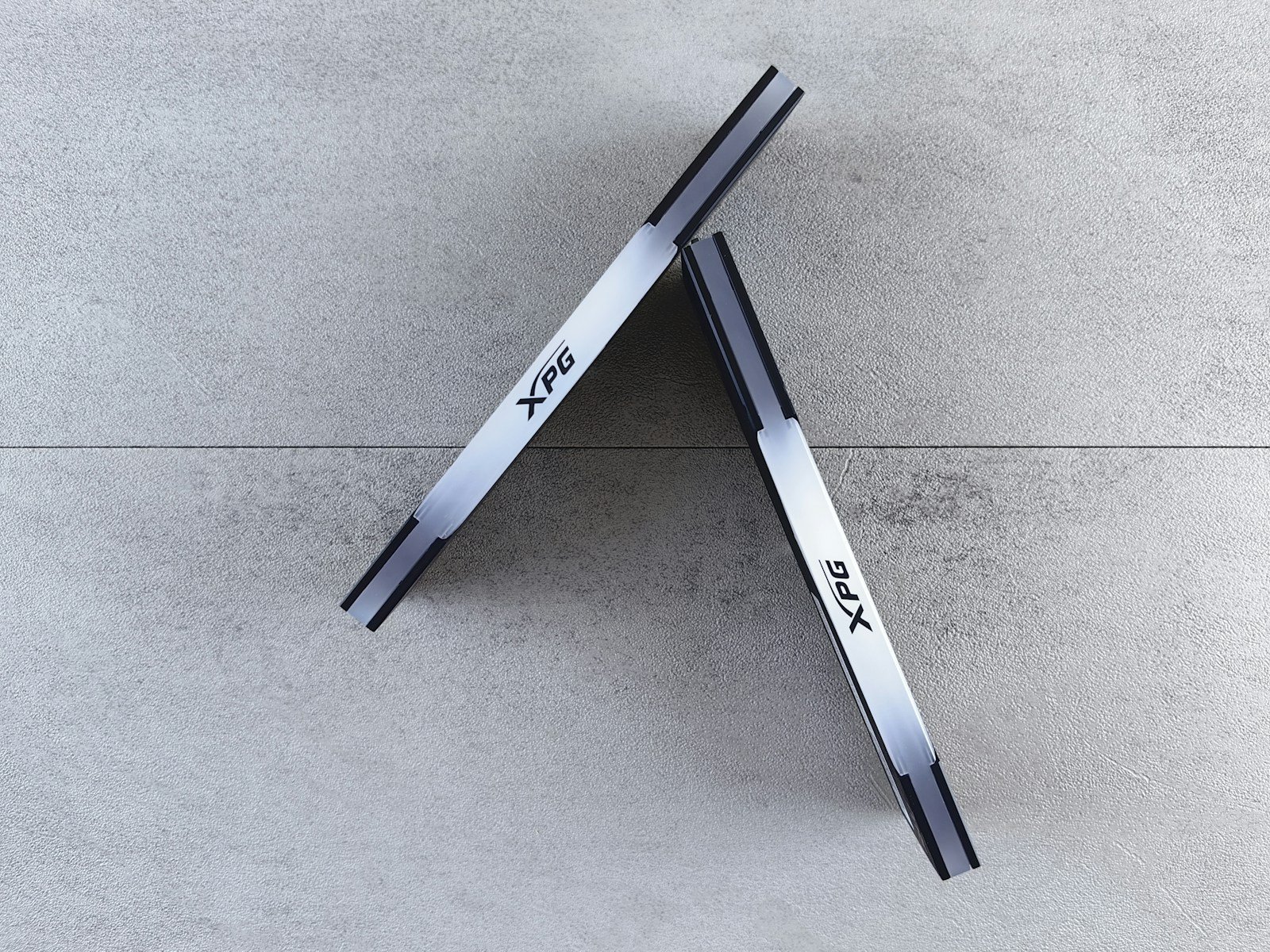
RAM technology continues to evolve at a rapid pace, and many tech enthusiasts are eagerly awaiting the next generation: DDR6. Based on current information from manufacturers and industry experts, DDR6 RAM is expected to be released between late 2025 and early 2026, with the official JEDEC specification likely to be finalized in early 2025. The development process is already underway, with companies like Samsung actively working on the new memory standard.
The transition from DDR5 to DDR6 follows a typical pattern in memory development. DDR4 had a lifespan of approximately eight years, and DDR5 is still being adopted in mainstream systems. The rollout of DDR6 will likely begin with server and datacenter applications in 2026, followed by a gradual introduction to consumer products in the following year.
DDR6 RAM Guide
As computing demands continue to skyrocket, memory technology is evolving rapidly to keep pace. DDR6 RAM is the next major leap in system memory, promising significant improvements in speed, efficiency, and capacity. This guide covers everything you need to know about DDR6 RAM—including what to expect, release timelines, and how it compares to previous generations.
What is DDR6 RAM?
DDR6 (Double Data Rate 6) is the upcoming generation of synchronous dynamic random-access memory (SDRAM) designed to replace DDR5. It aims to deliver faster data transfer rates, improved power efficiency, and enhanced reliability to meet the needs of high-performance computing, gaming, AI workloads, and data centers.
Key Features and Expectations of DDR6 RAM
1. Significantly Higher Speeds
DDR6 is expected to start at speeds around 8,800 MT/s (megatransfers per second) with potential to scale up to 17,600 MT/s or more, roughly doubling the top-end bandwidth of DDR5, which currently maxes out around 6,400 MT/s.
2. Improved Power Efficiency
DDR6 will incorporate advanced power management features to reduce voltage requirements and overall power consumption, making it more suitable for both desktop and mobile devices.
3. Enhanced Reliability
With built-in Error-Correcting Code (ECC) options and other improvements, DDR6 aims to provide greater data integrity, which is crucial for servers and mission-critical applications.
4. Wider Channel Architecture
Some DDR6 designs include wider data channels, which help increase throughput and reduce latency.
Release Timeline
- Initial Prototypes and Development: Leading memory manufacturers like Samsung, Micron, and SK Hynix have already moved beyond prototypes.
- Official Standardization: The JEDEC consortium, responsible for memory standards, has unveiled LPDDR6 for mobile devices, and the DDR6 standard for desktops is expected to be finalized soon.
- Market Availability: DDR6 RAM modules and compatible platforms are anticipated to launch around 2027.
DDR6 vs DDR5: What’s New?
| Feature | DDR5 RAM | DDR6 RAM (Expected) |
|---|---|---|
| Max Speed | Up to 6,400 MT/s | Starting at 8,800 MT/s, up to 17,600 MT/s |
| Voltage | ~1.1V | Lower voltage for better efficiency |
| Channel Width | 32 bits per channel | Wider channels for higher throughput |
| ECC Support | Optional, mostly server | Enhanced ECC options for better reliability |
| Power Efficiency | Improved over DDR4 | Further optimized for low power consumption |
| Release Date | 2020+ | Expected 2027 |
Who Will Benefit Most from DDR6?
- Gamers: Faster RAM speeds will reduce bottlenecks and improve frame rates in demanding games.
- Content Creators: Video editing, 3D rendering, and other intensive tasks will see faster data processing.
- Data Centers and AI: Enhanced reliability and bandwidth will support large-scale computing and machine learning workloads.
- Mobile Devices: LPDDR6 will bring similar advantages to smartphones and laptops, improving battery life and performance.
What to Expect When DDR6 Arrives
- New Motherboards and CPUs: DDR6 will require compatible chipsets and processors, so expect a new wave of hardware launches aligned with DDR6 support.
- Higher Price Points Initially: Early DDR6 modules will likely be premium-priced until manufacturing scales.
- Gradual Adoption: Like previous memory generations, DDR6 will coexist with DDR5 for some time before becoming mainstream.
Conclusion
DDR6 RAM represents a major technological advancement in memory performance and efficiency. Expected to debut in 2027, it will deliver faster speeds, better power efficiency, and enhanced reliability compared to DDR5. Whether you’re a gamer, professional, or enterprise user, DDR6 promises to elevate computing capabilities to new heights in the coming years.
Stay tuned for updates as manufacturers release more details and products based on this exciting next-generation memory standard.
Sources:
Key Takeaways
- DDR6 RAM will likely arrive in late 2025 or early 2026, with the final specifications expected to be completed in early 2025.
- The new memory standard will first appear in servers and datacenters before becoming available in consumer products.
- Major manufacturers like Samsung are already working on DDR6 technology, promising significant improvements over the current DDR5 standard.
Evolution of RAM Technology
Random Access Memory (RAM) technology has steadily advanced over the years, with each generation offering significant improvements in speed, efficiency, and performance. These advances have enabled computers to handle increasingly complex tasks while consuming less power.
From DDR4 to DDR5
DDR4 memory, introduced around 2014, served as the industry standard for many years. It offered speeds ranging from 2133 MHz to 3200 MHz and became known for its reliability and efficiency. DDR4 provided effective bandwidth of up to 25.6 GB/s, which was sufficient for most computing needs at the time.
The transition to DDR5 RAM in 2021 marked a significant leap forward. DDR5 doubled the bandwidth of its predecessor while reducing power consumption. It operates at base speeds of 4800 MHz, with some modules reaching 6400 MHz or higher.
DDR5 also introduced on-die ECC (Error Correction Code) and better power management. These improvements helped support data-intensive applications like AI, virtual reality, and high-end gaming.
The Advancement to DDR6
DDR6 represents the next evolution in memory technology, with development currently underway. According to recent information, the first draft of the DDR6 standard is expected to be released in early 2025, with the final specification coming later that year.
Mass production of DDR6 RAM will likely begin in late 2025 or early 2026. JEDEC, the organization that sets memory standards, anticipates completing the preliminary draft within this year and finalizing version 1.0 by the second quarter of 2025 at the earliest.
DDR6 is expected to deliver substantially higher memory speeds and effective bandwidth compared to DDR5. This advancement will support next-generation computing needs, particularly for AI processing, data centers, and extremely high-resolution gaming.
The new standard aims to address the increasing demands of future technologies while maintaining reasonable power efficiency.
DDR6 RAM Specifications and Performance
DDR6 RAM represents a significant leap forward in memory technology with advancements in speed, power efficiency, and data transfer capabilities. The upcoming standard aims to deliver substantial improvements over DDR5 in all key performance metrics.
Memory Speed and Bandwidth
DDR6 RAM is expected to deliver impressive speed improvements with initial modules operating at DDR6-12800 speeds. Industry projections suggest memory transfer rates could reach between 17,600 MT/s and 21,000 MT/s (Million Transfers per second). This represents nearly double the bandwidth capability of current DDR5 solutions.
The increased bandwidth comes from architectural improvements including enhanced channel design and higher data rates per pin. DDR6 will likely implement a more efficient prefetch system, potentially moving to a 32n prefetch from DDR5’s 16n prefetch.
Memory controllers will need significant redesigns to handle these higher speeds. Many experts believe DDR6 could support up to 12,800 Mbps per pin at launch, scaling higher as the technology matures.
Power Efficiency and Consumption
Despite the substantial performance increases, DDR6 RAM aims to maintain reasonable power consumption through several key innovations. The new standard is expected to operate at lower voltages than DDR5, potentially dropping below 1.0V for standard operations.
Power efficiency improvements include:
- More granular power management zones
- Enhanced voltage regulation circuits
- Improved thermal characteristics
- Adaptive power scaling based on workload
These enhancements are particularly important for data centers and mobile applications where power consumption directly impacts operating costs and battery life.
Enterprise-grade DDR6 modules will likely include advanced power monitoring capabilities, allowing systems to optimize memory performance against power constraints in real-time.
Latency and Data Transfer Rate
While raw bandwidth increases, latency management remains a critical focus for DDR6 development. Initial DDR6 modules may face slightly higher absolute latency figures, but the overall system performance benefit should outweigh these concerns.
Data transfer rates will benefit from:
- Improved signal integrity at higher frequencies
- More sophisticated error correction mechanisms
- Enhanced channel coding to reduce interference
- Higher efficiency in data packaging protocols
DDR6 is expected to implement new techniques for reducing effective latency, including more advanced command queuing and speculation. This helps maintain responsive performance despite physical timing constraints at higher speeds.
The standard will likely include enhanced features for AI and machine learning workloads, where data transfer patterns differ from traditional computing tasks.
Industry Adoption and Compatibility
The transition to DDR6 RAM will require significant coordination across the computing industry. Hardware manufacturers will need to redesign motherboards, update chipsets, and ensure backward compatibility where possible.
Integration with CPUs and Chipsets
Intel and AMD will likely begin integrating DDR6 support into their processors after the memory standard is finalized in early 2025. Intel’s Panther Lake architecture, expected to follow Arrow Lake, might be among the first platforms to support DDR6.
AMD typically follows a similar timeline for adopting new memory technologies. Both companies will need to modify their memory controllers to handle DDR6’s higher speeds and different signaling requirements.
The transition period will create a market where both DDR5 and DDR6 systems exist simultaneously. This pattern occurred during previous transitions from DDR3 to DDR4 and DDR4 to DDR5.
Chipset manufacturers will need to update their designs to handle the increased bandwidth and power requirements of DDR6.
Impact on Consumer Electronics
Laptops and mobile devices will benefit significantly from DDR6’s improved power efficiency and higher performance. The new RAM standard will enable thinner devices with longer battery life.
High-performance computing applications like AI processing and gaming will see immediate advantages from DDR6’s faster speeds. However, adoption in consumer electronics typically lags behind enterprise equipment by 12-18 months.
DDR6 RAM will likely first appear in premium devices before gradually moving into mid-range products. Budget devices may continue using DDR5.
Smart TVs, gaming consoles, and other consumer electronics will eventually benefit from DDR6, though this transition may take until 2027 or 2028 to become widespread.
RAM Module Form Factors
Traditional DIMM modules used in desktop computers will likely maintain similar physical dimensions when transitioning to DDR6. This helps with compatibility in existing case designs.
The SO-DIMM format used in laptops may see design refinements to accommodate DDR6’s improved thermal characteristics and power management.
Some manufacturers might introduce new form factors optimized for DDR6’s capabilities, especially for specialized applications. These could include more compact designs for portable devices or enhanced cooling solutions for high-performance computing.
DDR6 modules will need updated connection pins and possibly different notch positions to prevent incorrect installation in DDR5 slots. This physical differentiation helps avoid damage to both memory modules and motherboards.
Leading Manufacturers and Future Developments
Several key players are pushing DDR6 RAM development forward, with established manufacturers investing heavily in research while new technologies emerge alongside the next memory standard.
Current Market Leaders
Samsung, SK Hynix, and Micron remain the dominant forces in RAM manufacturing, with all three actively developing DDR6 technology. These companies control roughly 95% of the DRAM market and are expected to lead the transition to DDR6 starting in late 2025 or early 2026.
Samsung has already begun allocating significant resources to DDR6 development, building on their success with DDR5 and LPDDR5X technologies. Their expertise in GDDR6 and GDDR6X for graphics applications provides valuable experience for the new standard.
SK Hynix announced in 2023 that they had begun preliminary work on DDR6 memory modules. The company has been expanding manufacturing capacity in anticipation of increased demand when the new standard arrives.
Micron Technology has been more reserved in public statements but is widely known to be working on early DDR6 prototypes. Industry analysts expect Micron to focus heavily on server and enterprise applications for their initial DDR6 offerings.
Emerging Technologies and Research
The development of DDR6 involves collaboration between manufacturers and technology partners like Synopsys, who provide essential testing and validation tools. These partnerships are crucial for ensuring compatibility across platforms.
Researchers are exploring new materials for memory chips that could dramatically improve DDR6 performance. Silicon alternatives like gallium nitride show promise for faster switching speeds and lower power consumption.
LPDDR6, the mobile-focused variant, is developing in parallel with standard DDR6. It will likely feature even greater power efficiency improvements than its desktop counterpart, with Samsung and SK Hynix leading development.
Early benchmarks suggest DDR6 will offer 50-100% higher bandwidth than DDR5 while consuming less power per bit transferred. This efficiency gain comes from architectural improvements rather than just higher clock speeds.
Frequently Asked Questions
DDR6 RAM represents the next major leap in memory technology with significant potential improvements in bandwidth, power efficiency, and overall performance. Release timelines, compatibility concerns, and expected benefits are important considerations for those planning future system upgrades.
What is the expected release date for DDR6 RAM?
Based on current industry information, DDR6 RAM is expected to launch between late 2025 and early 2026.
The first draft of the DDR6 specification from JEDEC should be ready within 2024, with version 1.0 of the specification likely finalized by mid-2025.
Actual consumer availability will likely follow several months after the final specification is published, putting retail products in the market by late 2025 at the earliest.
How does DDR6 RAM compare to DDR5 in terms of performance improvements?
DDR6 RAM is projected to offer substantially higher bandwidth than DDR5, potentially up to 10 times the bandwidth of DDR4 according to Synopsys.
The new standard will likely feature improved power efficiency while delivering faster data transfer rates and lower latency.
Technical improvements will include enhanced signal integrity, better power management, and more refined memory controller designs to handle the increased speeds.
What will be the price range for DDR6 RAM at launch?
As with previous memory generation launches, DDR6 RAM will command premium pricing when first released.
Enterprise and professional segments will see DDR6 memory first, with these modules likely costing significantly more than equivalent DDR5 modules at launch.
Consumer-grade DDR6 modules will gradually become more affordable as manufacturing scales up and yields improve, typically 12-18 months after initial release.
What enhancements can gamers expect from DDR6 RAM compared to previous generations?
Gamers can expect faster load times, improved frame rates in memory-intensive games, and better multitasking performance with DDR6 RAM.
The increased bandwidth will particularly benefit high-resolution gaming at 4K and above, as well as applications using real-time ray tracing and complex physics simulations.
Games with large open worlds that stream assets continuously will see noticeable improvements in texture loading and environmental detail.
Will DDR6 RAM be compatible with current generation motherboards?
No, DDR6 RAM will require new motherboards specifically designed to support the standard.
The physical slot design, signaling requirements, and power delivery specifications will differ from DDR5, making backwards compatibility impossible.
System builders should plan for a complete platform upgrade when transitioning to DDR6 technology, including new motherboards and likely new processors as well.
When can we anticipate the availability of DDR6 RAM in laptops?
Laptop implementations of DDR6 will likely trail desktop availability by 6-12 months.
Mobile DDR6 variants will emphasize power efficiency alongside performance improvements to maintain reasonable battery life.
High-end gaming laptops and mobile workstations will be the first portable devices to feature DDR6 memory, probably in mid to late 2026.