
Apple’s AI platform, Apple Intelligence, is back in the headlines — and not entirely by design. Over the past week, the company has faced an unexpected rollout in China, released the first beta of iOS 26.5, and signaled a broader shift in its long-term AI strategy.
Here’s the latest.
Apple Intelligence Accidentally Goes Live in China
Apple Intelligence briefly appeared on iPhones in mainland China before being pulled, according to multiple reports.
Users in China reported seeing Apple Intelligence features enabled — despite the fact that the platform has not yet received full regulatory approval in the country. Under China’s AI regulations, generative AI systems must undergo security evaluations and algorithm filings before public deployment.
- Bloomberg’s Mark Gurman reported that the features were unintentionally activated.
- South China Morning Post noted that the premature release could risk regulatory scrutiny.
- The Next Web highlighted potential penalties under China’s AI security rules.
- 9to5Mac initially reported a rollout before updating that the feature had been pulled.
The features were quickly disabled, suggesting the launch was accidental rather than a coordinated approval.
Why This Matters
China is a critical market for Apple, but it also has one of the world’s strictest AI regulatory frameworks. Any misstep could complicate Apple’s ability to deploy future AI services there — especially as domestic competitors aggressively expand their own AI ecosystems.
Apple has not publicly detailed its China-specific AI strategy, including whether it will partner with a local AI provider to meet compliance requirements.
iOS 26.5 Beta: Limited AI Expansion
Apple released the first beta of iOS 26.5, and while it expands some system features, it notably does not introduce major new Siri capabilities.
What’s Included:
- Apple Intelligence support appearing in China (briefly, before being pulled)
- Expanded Notification Forwarding
What’s Missing:
- No major new Siri Apple Intelligence upgrades
- No significant new generative AI tools
According to MacRumors, the absence of new Siri features suggests Apple may be holding larger upgrades for iOS 27, expected in September.
This aligns with earlier reporting that Apple’s more advanced conversational Siri overhaul has been delayed.
AI-Generated Shortcuts Coming in iOS 27
One of the more intriguing developments comes from Apple’s work on the Shortcuts app.
According to MacRumors, Apple is developing functionality that would allow users to generate custom Shortcuts actions using Apple Intelligence models. Instead of manually building automations step by step, users could describe what they want, and AI would construct the workflow.
If launched in iOS 27, this could represent one of the first deeply integrated, productivity-focused AI features inside Apple’s core OS.
Apple’s Broader AI Strategy: A Platform Play
Meanwhile, Bloomberg reports that Apple is pivoting its AI approach toward a more platform-centric model — closer to its traditional App Store strategy.
Rather than competing head-on as a standalone chatbot provider, Apple is reportedly:
- Embedding AI deeply into its operating systems
- Enabling developers to build on its models
- Reinforcing hardware-driven AI experiences
- Potentially reshaping search-like experiences inside its ecosystem
This approach would align with Apple’s long-standing business model: make AI a value-add that strengthens hardware sales and services revenue, rather than chasing cloud-based AI dominance.
The Bigger Picture
Apple Intelligence launched in 2024, but its global expansion has been gradual and tightly controlled. The accidental China rollout highlights the regulatory complexity Apple faces as it scales AI worldwide.
At the same time:
- Major Siri upgrades appear delayed
- AI-powered Shortcuts could be a breakout feature in iOS 27
- Apple is repositioning AI as a platform layer rather than a chatbot product
In short, Apple Intelligence is evolving — but cautiously.
The next major checkpoint will likely be WWDC 2026, where Apple is expected to clarify:
- Its Siri roadmap
- Developer access to AI models
- And possibly its official China strategy
Until then, Apple Intelligence remains both a work in progress — and one of the most strategically important transitions in Apple’s modern history.
Apple Intelligence
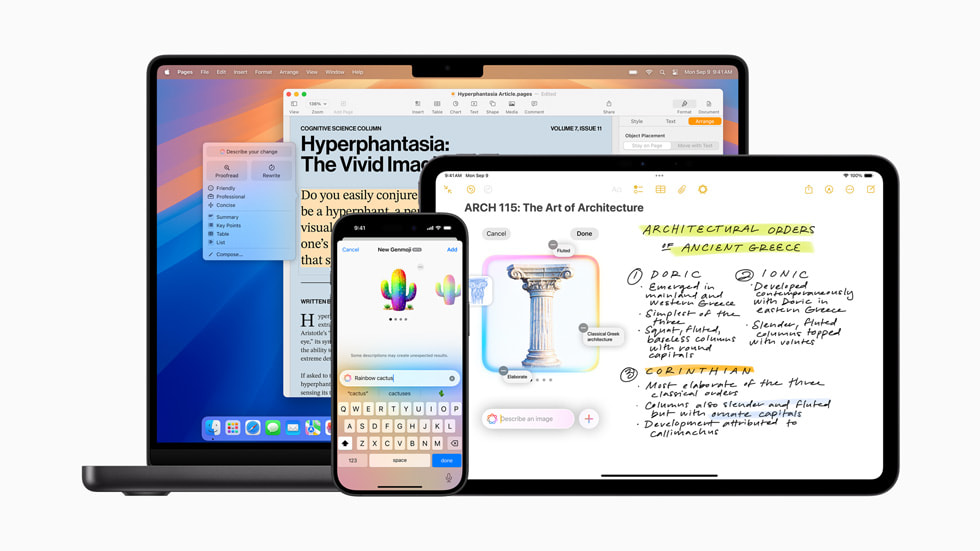
Apple Intelligence is a new AI system from Apple that helps users communicate, work, and express their ideas more easily. This personal intelligence system combines powerful generative models with privacy-focused technology to help with writing tasks, summarizing information, and enhancing Siri’s capabilities. Released in 2024, it represents Apple’s major step into the artificial intelligence space.
Now available on iPhone, iPad, and Mac devices, Apple Intelligence offers practical features that simplify everyday tasks. Users can refine their writing with AI suggestions, get summaries of notifications and messages, and experience a more natural interaction with Siri. The system also includes smart photo organization with natural language search capabilities.
What sets Apple Intelligence apart is its commitment to privacy standards. Unlike many AI systems that process data in the cloud, Apple designed their system to protect user information while still delivering helpful AI features. This approach maintains Apple’s reputation for balancing innovation with privacy protection.
Key Takeaways
- Apple Intelligence combines AI writing tools, smart summarization, and enhanced Siri capabilities to help users communicate and work more efficiently.
- The system is now available across Apple’s main devices with features like writing assistance, notification summaries, and improved photo organization.
- Apple has prioritized user privacy in its AI implementation, setting new standards for how personal data is handled in artificial intelligence systems.
Overview of Apple Intelligence
Apple Intelligence represents Apple’s newest AI system designed to enhance user experiences across its ecosystem. This technology integrates both on-device and server processing to provide intelligent features while maintaining Apple’s privacy standards.
Evolution of Apple’s AI and Machine Learning
Apple’s journey into artificial intelligence began long before Apple Intelligence, with technologies like Siri introducing voice assistance to iPhone users in 2011. Over the years, Apple gradually expanded its AI capabilities through incremental improvements to Siri and machine learning features embedded in photos, messaging, and other applications.
The development of Apple silicon created a foundation for more advanced on-device processing, allowing Apple to implement sophisticated AI while maintaining its privacy-focused approach. This hardware advantage enabled Apple to develop a comprehensive AI system that could compete with offerings from other tech giants.
Apple Intelligence marks a significant evolution in this journey, representing a unified approach rather than isolated features.
Core Functions of Apple Intelligence
Apple Intelligence encompasses several key functions designed to simplify everyday tasks. The system can assist with writing and editing text, offering suggestions to improve clarity or adjust tone while respecting the user’s voice. Users can also generate and edit images directly from natural language prompts.
Organizational capabilities allow Apple Intelligence to summarize information from emails, messages, and notifications, helping users quickly understand important content. The system intelligently categorizes information and surfaces relevant details when needed.
Siri has been enhanced through Apple Intelligence, with improved understanding of natural language and context awareness. The voice assistant can now handle more complex requests and maintain conversational context over time.
A distinguishing characteristic of Apple Intelligence is its privacy-first approach. The system processes sensitive tasks directly on the device whenever possible, sending data to servers only when necessary and with appropriate safeguards.
Integration and Impact
Apple Intelligence is deeply integrated into Apple’s ecosystem, enhancing functionality across devices while maintaining the company’s commitment to privacy. The system bridges user needs with powerful AI tools directly on iPhones, iPads, and Macs.
Apple Intelligence in iOS Updates
iOS 18.4 marks a significant expansion of Apple Intelligence features across compatible devices. The iPhone 15 Pro and iPhone 16 lineup benefit most from these updates, with their advanced chips handling complex AI tasks efficiently on-device.
Users who upgrade to these newer iOS versions can access improved summarization capabilities for notifications, emails, and messages. The system now better understands context and can prioritize information based on user habits.
iPad users received similar updates, though some features rolled out in phases. iOS 18.3 first introduced basic Apple Intelligence tools, while 18.4 expanded the functionality to include writing refinement and more natural Siri interactions.
Device compatibility remains an important consideration, as older models may not support all Apple Intelligence features due to hardware limitations.
Influence on User Experience and Privacy
Apple Intelligence transforms how users interact with their devices while maintaining stringent privacy standards. Unlike cloud-based AI systems, Apple processes most requests directly on the device, protecting sensitive user data.
Key privacy features include:
- Local processing of personal information
- User control over data sharing
- Transparency about what information leaves the device
The user experience benefits significantly from these integrations. Writing tasks become more efficient with smart suggestions and refinements. Siri responds more naturally to queries, understanding context better than previous versions.
The system also enhances productivity by summarizing lengthy communications, allowing users to grasp essential information quickly. This proves particularly valuable for busy professionals managing multiple communication channels.
Cookie management and preferences are respected within the Apple Intelligence framework, giving users control over how their data is utilized across applications.
Frequently Asked Questions
Apple Intelligence brings many new features to compatible Apple devices. Here are answers to common questions about this AI system, its availability, and how it works across different devices.
When is the release date for the latest Apple Intelligence update?
Apple Intelligence began rolling out with iOS 18, iPadOS 18, and macOS 15 Sequoia. The latest update, macOS 15.1, was recently released with additional Apple Intelligence features.
Full functionality continues to expand through regular updates. As of March 2025, Apple has maintained its progressive rollout strategy to ensure stability.
What are the key features included in the new Apple Intelligence?
Apple Intelligence includes powerful generative AI tools that enhance writing, workflow, and communication. The system offers smart interruption management through a new Reduce Interruptions Focus mode.
The suite integrates directly into core functions of compatible devices. It provides AI-powered enhancements while maintaining Apple’s privacy standards through on-device processing whenever possible.
Which devices are compatible with the latest version of Apple Intelligence?
Apple Intelligence works on iPhone, iPad, and Mac devices. The system is designed to function at the core of these devices through integrated processing.
Not all older models support the full range of Apple Intelligence features. The company has tailored compatibility based on each device’s processing capabilities.
What improvements has Apple Intelligence brought to the iPhone 15?
The iPhone 15 received significant enhancements through Apple Intelligence, including smarter notification management and improved writing tools. The AI system helps filter interruptions more effectively.
On-device processing allows the iPhone 15 to handle many AI tasks without sending data to external servers. This approach maintains user privacy while still delivering powerful AI capabilities.
How can users access or utilize Apple Intelligence on their devices?
Apple Intelligence is available as an optional suite of features. Users can enable it through their device settings after installing the required operating system update.
Once activated, the AI tools integrate into existing apps and functions. The system works behind the scenes to enhance everyday tasks without requiring users to learn complicated new interfaces.
What advancements in AI can be expected from the iPhone 16 using Apple Intelligence?
The iPhone 16 is expected to feature more advanced on-device AI processing capabilities. This will allow for faster and more sophisticated Apple Intelligence features.
New models will likely expand the range of tasks that can be completed entirely on-device. Privacy protections will remain central to the design, with powerful generative models working directly on the device rather than in the cloud whenever possible.