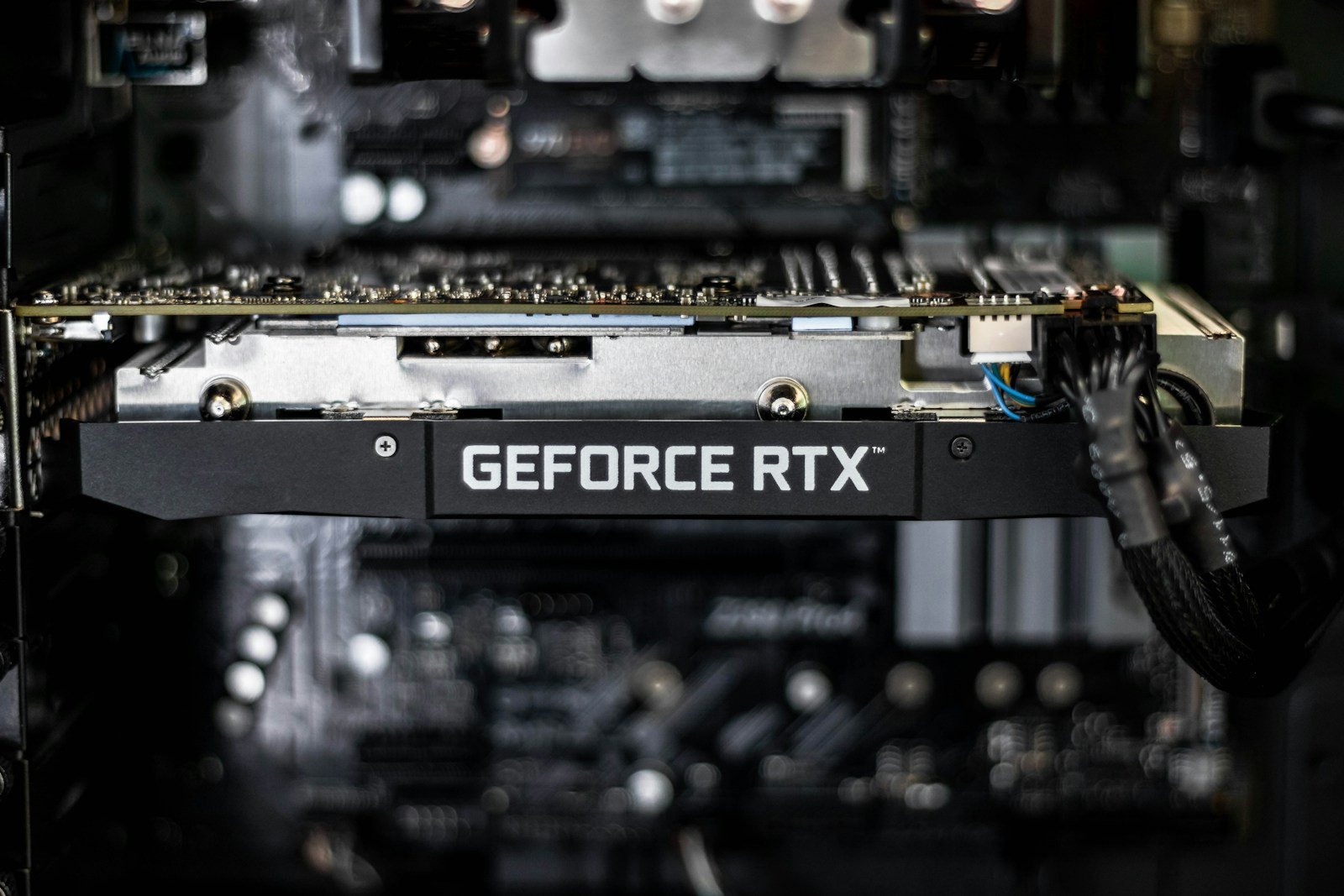
The NVIDIA GeForce RTX 2060 graphics card was announced on January 7, 2019, during CES 2019. The card officially launched and became available in stores on January 15, 2019, marking NVIDIA’s push to bring ray tracing technology to a more affordable price point of $349. This release brought the advanced features of the RTX 20 series to mainstream gamers who couldn’t afford the higher-end RTX 2070 and 2080 models.
Built on the 12nm process and based on the TU106 graphics processor, the RTX 2060 represented a significant step forward in gaming technology. It introduced real-time ray tracing and AI capabilities to a wider audience. The card was also made available in pre-built systems from major manufacturers like Acer, Dell, HP, and Lenovo at launch.
How Good Is The RTX 2060 In 2026?
The NVIDIA GeForce RTX 2060, launched in early 2019, was a popular mid-range GPU offering solid performance and ray tracing capabilities at an affordable price. But how does it hold up in 2026, seven years later?
Overview of RTX 2060 Specs
- CUDA Cores: 1920
- Base Clock: ~1365 MHz
- Boost Clock: ~1680 MHz
- Memory: 6GB GDDR6
- Memory Bandwidth: 336 GB/s
- Ray Tracing and DLSS: Supported (1st Gen RT cores and Tensor cores)
Performance in 2026
Gaming Performance
- 1080p Gaming: Still capable of running most AAA titles at medium to high settings with playable frame rates.
- 1440p Gaming: Manageable on medium settings, but struggles with newer, more demanding games at ultra settings.
- Ray Tracing: First-generation ray tracing is supported but limited; newer games with advanced ray tracing effects may cause significant FPS drops.
- DLSS: Supports DLSS 1.0/2.0, which helps performance but is less efficient than newer versions available on RTX 30 and 40 series.
Comparison to Newer GPUs
- The RTX 2060 often outperforms entry-level newer GPUs like the RTX 3050 in many games, sometimes by around 10%, while being cheaper in the used market.
- However, it falls behind mid-range and high-end cards from the RTX 30 and 40 series, which offer better ray tracing, AI features, and power efficiency.
Productivity and Creative Work
- Suitable for light to moderate GPU-accelerated tasks like video editing and 3D rendering.
- Newer GPUs with more VRAM and improved architectures handle modern creative workloads more efficiently.
Value and Market Position in 2026
- Price: The RTX 2060 is widely available used at attractive prices, often cheaper than newer entry-level cards.
- Value: Offers good bang for the buck in budget builds or upgrades if you find it at a low price.
- Limitations: Limited VRAM (6GB) can be a bottleneck for future-proofing and demanding applications.
Should You Buy an RTX 2060 in 2026?
Pros:
- Affordable on the used market
- Decent 1080p gaming performance
- Supports ray tracing and DLSS (albeit older versions)
Cons:
- Limited for 1440p and 4K gaming in modern titles
- Older ray tracing technology
- Less power-efficient and fewer features than newer GPUs
- 6GB VRAM can be limiting for future games
Summary Table
| Aspect | RTX 2060 in 2026 |
|---|---|
| 1080p Gaming | Good performance on medium/high settings |
| 1440p Gaming | Playable on medium settings |
| Ray Tracing | Supported but limited |
| DLSS Support | Yes (older versions) |
| VRAM | 6GB (may limit future games) |
| Price | Affordable used prices |
| Power Efficiency | Less efficient than newer GPUs |
| Future-Proofing | Limited for upcoming AAA titles |
Conclusion
The RTX 2060 remains a viable option in 2026 for budget-conscious gamers who primarily play at 1080p and don’t require the latest ray tracing features. It offers good value on the used market but is outclassed by newer GPUs in terms of performance, power efficiency, and future-proofing.
If you want solid performance for modern games at higher resolutions or advanced ray tracing, investing in a newer RTX 30 or 40 series GPU would be a better choice.
References
- UserBenchmark: Nvidia RTX 2060
- ExpertBeacon: Is RTX 2060 Worth It Now in 2025?
- Club386: RTX 2060 in 2025
Key Takeaways
- The GeForce RTX 2060 launched on January 15, 2019 with a starting price of $349.
- NVIDIA designed the RTX 2060 to bring ray tracing and AI features to mainstream gamers.
- The card was available both as a standalone purchase and in pre-built systems from major computer manufacturers.
RTX 2060 Overview
The NVIDIA GeForce RTX 2060 marked an important milestone in graphics card technology. Released on January 15, 2019, it brought ray tracing capabilities to a more affordable price point while delivering solid performance for 1080p and 1440p gaming.
Key Features and Technologies
The RTX 2060 is built on NVIDIA’s Turing architecture using a 12nm manufacturing process. It features 1,920 CUDA cores and 240 Tensor cores that enable AI-enhanced graphics processing. The card comes with 6GB of GDDR6 memory on a 192-bit memory interface, delivering 336 GB/s of memory bandwidth.
Ray tracing technology allows for realistic lighting, shadows, and reflections in compatible games. This was previously only available in higher-end cards like the RTX 2070 and 2080.
Deep Learning Super Sampling (DLSS) is another standout feature. It uses AI to upscale lower-resolution images to higher resolutions with minimal performance impact. This technology helps boost frame rates while maintaining visual quality.
HDR support provides more vibrant colors and higher contrast ratios in compatible displays and games.
Comparative Performance
When released, the RTX 2060 offered approximately 60-70% better performance than the GTX 1060, its predecessor in the same price category. It even matched or exceeded GTX 1070 performance in many games.
At 1080p resolution, the RTX 2060 easily delivers 60+ FPS in most AAA titles with high to ultra settings. At 1440p, it maintains playable framerates in the 45-60 FPS range depending on the game and settings.
Compared to the RTX 2070, it trails by about 10-15% in raw performance. However, the RTX 2060 provides much better value for money with only a modest performance sacrifice.
Later in 2019, NVIDIA released the RTX 2060 SUPER with improved specifications. In December 2021, a 12GB variant of the RTX 2060 was released, though availability was limited.
Connectivity and Power
The RTX 2060 requires a single 8-pin PCIe power connector and has a TDP (Thermal Design Power) of 160 watts. NVIDIA recommends a 500-watt power supply for systems using this card.
For display connections, the RTX 2060 typically includes:
- 1x DisplayPort 1.4
- 1x HDMI 2.0b
- 1x DVI-DL
These connections support multiple monitors and resolutions up to 8K at 60Hz. The DisplayPort 1.4 output supports G-Sync compatible monitors for smoother gameplay without screen tearing.
The card’s physical dimensions vary by manufacturer but reference designs measure around 9 inches (229mm) in length, making it compatible with most mid-tower and larger PC cases.
Release and Availability
The NVIDIA GeForce RTX 2060 made its entrance to the gaming market in early 2019, following its announcement at CES 2019. The card represented NVIDIA’s effort to bring RTX technology to a more affordable price point while still delivering solid performance for mainstream gamers.
Official Launch Date
NVIDIA officially unveiled the GeForce RTX 2060 on January 7, 2019, during the Consumer Electronics Show (CES) in Las Vegas. This announcement came after the previous release of higher-tier RTX 20 series cards like the 2070, 2080, and 2080 Ti in 2018.
The actual retail availability followed shortly after the announcement. According to NVIDIA’s official communications, the RTX 2060 was set to hit store shelves on January 15, 2019, giving retailers and partners about a week to prepare for the launch.
The timing of the release was strategic, coming just after the holiday season but early enough in the year to capture interest from gamers looking to upgrade their systems.
Market Availability
At launch, the RTX 2060 was available in two primary forms: the NVIDIA Founders Edition and various partner cards from manufacturers like ASUS, MSI, EVGA, and others.
System integrators quickly incorporated the new GPU into their pre-built offerings. Companies including Acer, Alienware, Dell, HP, and Lenovo announced systems featuring the RTX 2060 would be available starting January 15, 2019.
Despite the excitement surrounding the launch, some regions experienced limited initial stock. As with many GPU releases, demand sometimes exceeded supply in the first few weeks.
Years later, in December 2021, NVIDIA reissued the RTX 2060 with an upgraded 12GB VRAM variant. However, this refresh reportedly faced significant availability challenges at launch.
Pricing at Launch
The GeForce RTX 2060 launched with an official MSRP of $349 for the Founders Edition model. This pricing positioned it as the most affordable entry point into NVIDIA’s RTX technology at that time.
Partner cards varied in price depending on cooling solutions, factory overclocks, and design features:
- Base models: Started around $349-$369
- Mid-tier variants: Typically ranged from $369-$399
- Premium models: Some reached $429 or higher with advanced features
This price point represented a significant value proposition for gamers seeking ray-tracing capabilities without investing in the more expensive RTX 2070 or higher models. The $349 MSRP made the card approximately 40% cheaper than the RTX 2070’s launch price while still delivering solid 1080p and 1440p gaming performance.
Gaming and Benchmarks
The RTX 2060 demonstrated significant performance improvements over previous generation cards, particularly compared to the GTX 1060. Benchmark results and real-world gaming tests revealed impressive capabilities at 1080p and 1440p resolutions.
Benchmarking the RTX 2060
According to benchmark data, the RTX 2060 delivered approximately 60% better performance than the GTX 1060 across 23 different tests at 1440p resolution. This substantial improvement positioned the RTX 2060 as an excellent mid-range option when it launched in January 2019.
In synthetic benchmarks like Unigine Superposition, the RTX 2060 consistently outperformed its predecessor by significant margins. The card’s 6GB of GDDR6 memory (later expanded to 12GB in a December 2021 variant) provided sufficient bandwidth for most modern games at the time.
Core specifications included:
- 1,920 CUDA cores
- 336 GB/s memory bandwidth
- 6GB GDDR6 memory (original model)
Real-World Gaming Tests
In actual gameplay scenarios, the RTX 2060 handled most AAA titles with ease at 1080p, often exceeding 60 FPS even with high settings. Games like Battlefield V, Shadow of the Tomb Raider, and Far Cry 5 ran smoothly at 1080p with high to ultra settings.
At 1440p resolution, the card remained capable of 60+ FPS in many titles with some settings adjustments. In Doom and Wolfenstein II, the RTX 2060 performed particularly well due to their optimized engines.
The RTX 2060 also introduced ray-tracing capabilities to the mid-range market, though enabling RTX features typically resulted in performance penalties. Games like Battlefield V and Shadow of the Tomb Raider with RTX enabled would often require DLSS (Deep Learning Super Sampling) to maintain playable framerates.
Technical Specifications
The NVIDIA GeForce RTX 2060 launched on January 15, 2019, bringing ray-tracing technology to a wider audience of gamers. This graphics card represents the entry-level option in NVIDIA’s RTX 20 series.
The RTX 2060 is built on NVIDIA’s Turing architecture using a 12nm manufacturing process. It features the TU106 GPU chip with 1,920 CUDA cores, enabling parallel processing for improved gaming performance.
Memory specifications include 6GB of GDDR6 VRAM with a 192-bit memory interface. A 12GB variant was later released on December 7, 2021, though it had limited availability at launch.
| Specification | Details |
|---|---|
| GPU Architecture | Turing (TU106) |
| CUDA Cores | 1,920 |
| Memory | 6GB GDDR6 (12GB variant available) |
| Memory Interface | 192-bit |
| Base Clock | 1,365 MHz |
| Boost Clock | 1,680 MHz |
| TDP | 160W |
The RTX 2060 supports Deep Learning Super Sampling (DLSS), an AI-powered technology that uses neural networks to produce higher-resolution images with better performance. This technology works well with high-end CPUs like the Intel Core i9-7900X for maximum gaming potential.
For laptops, NVIDIA also offers the RTX 2060 Max-Q design, which features lower clock speeds and TDP to accommodate the thermal constraints of portable systems.
Frequently Asked Questions
The NVIDIA GeForce RTX 2060 generated significant interest due to its performance capabilities, technological features, and competitive pricing. Here are answers to common questions about this graphics card.
What were the launch details for the RTX 2060?
The NVIDIA GeForce RTX 2060 was officially announced in January 2019. The card was launched on January 7th, 2019, at CES (Consumer Electronics Show).
Retail availability began on January 15th, 2019, when the cards became available both as standalone products and in prebuilt systems from manufacturers like Acer, Dell, HP, and Lenovo.
The Founders Edition from NVIDIA released alongside partner cards from various manufacturers, each offering different cooling solutions and slight variations in clock speeds.
How does the RTX 2060 compare in performance with other models in its series?
The RTX 2060 was designed to deliver performance comparable to the previous generation’s GTX 1070 Ti. This positioned it as a strong mid-range option in the RTX 20-series lineup.
It offered approximately 60-70% of the performance of the higher-end RTX 2080 while costing significantly less. The card provided excellent 1080p gaming performance and respectable 1440p capabilities.
When compared to its direct predecessor in the previous generation, the GTX 1060, the RTX 2060 delivered approximately 60% better performance in traditional rasterization workloads.
What is the pricing strategy for the RTX 2060 upon its release?
NVIDIA positioned the RTX 2060 with a starting price of $349 for the Founders Edition. This pricing strategy made RTX features more accessible to mainstream gamers.
Partner cards varied in price depending on cooling solutions, factory overclocks, and other features. Some premium models retailed for $50-100 more than the base price.
The pricing represented NVIDIA’s effort to bring ray-tracing technology to a wider audience, as previous RTX cards (2070, 2080, 2080 Ti) were significantly more expensive.
What are the technological advances included in the RTX 2060?
The RTX 2060 was built on NVIDIA’s Turing architecture using a 12nm manufacturing process. The graphics card was based on the TU106 GPU.
It featured dedicated RT cores for ray tracing and Tensor cores for AI-accelerated functions like DLSS (Deep Learning Super Sampling). These technologies represented the biggest advances over the previous GTX series.
The card included 6GB of GDDR6 memory, providing substantial bandwidth improvements over the GDDR5 memory found in most GTX 10-series cards.
How has the RTX 2060 been received by the gaming community post-launch?
The RTX 2060 received generally positive reviews for offering good performance at its price point. Gamers appreciated the card’s ability to handle most modern games at 1080p with high frame rates.
Some initial criticism focused on the limited number of games supporting ray tracing at launch. However, as more titles adopted the technology, the value proposition improved.
The card proved popular with builders creating mid-range gaming PCs, offering a good balance between cost and performance capability.
What can consumers expect in terms of long-term support and driver updates for the RTX 2060?
NVIDIA has maintained a strong record of providing driver updates for the RTX 2060, including performance optimizations and new feature support. This support typically continues for several years after release.
Game-specific optimizations are regularly included in GeForce driver updates, helping the RTX 2060 maintain compatibility with new titles as they release.
The RTX 2060’s support for technologies like DLSS has actually improved its longevity, as these AI upscaling features help the card maintain playable framerates in newer, more demanding games.