Virtual reality (VR) has changed how we experience digital content, offering immersive experiences that weren’t possible before. From gaming to educational applications, VR headsets transport users to new worlds with just a simple device. The technology has advanced significantly in recent years, making these devices more accessible and affordable.
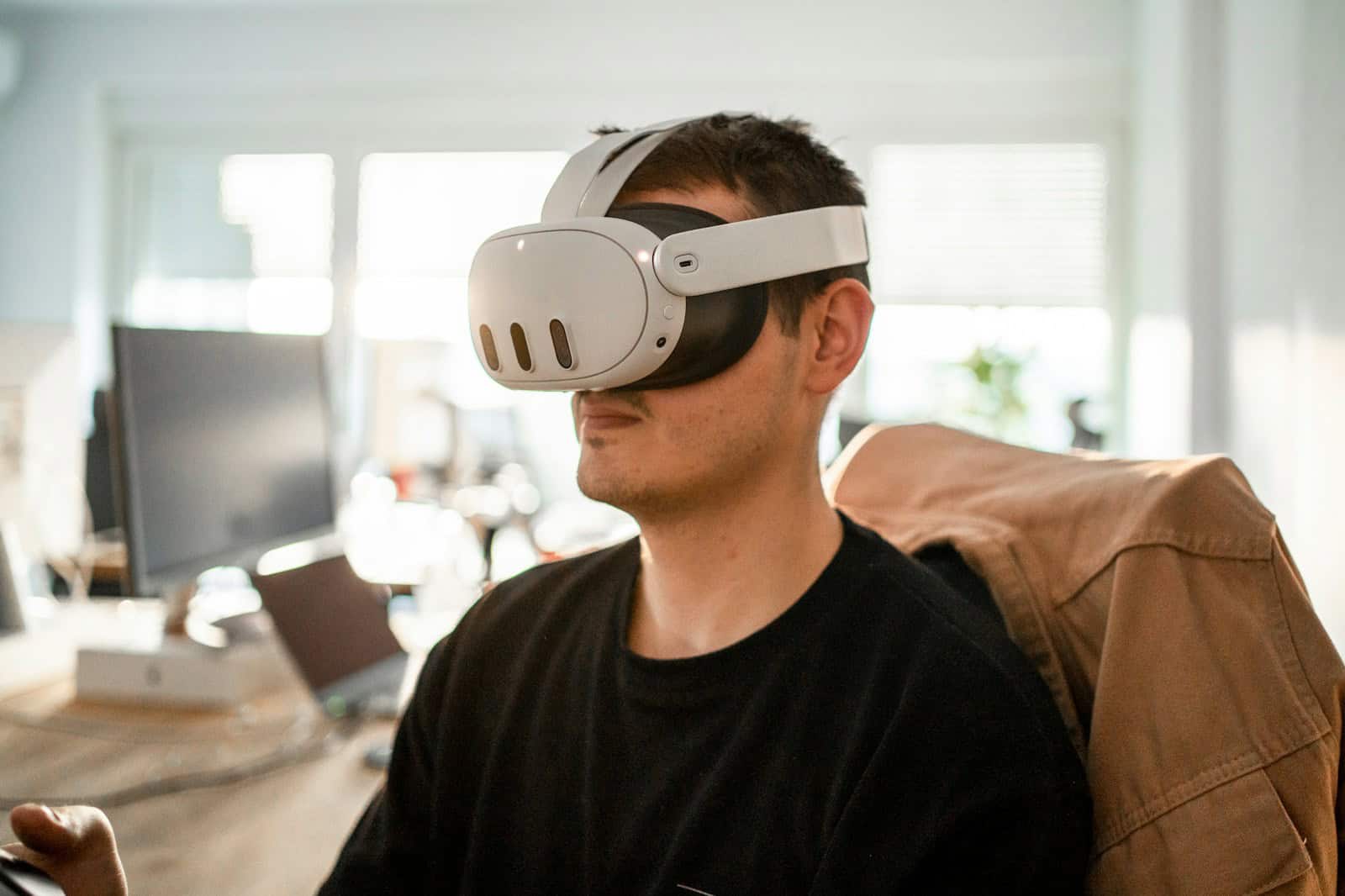
The best VR headset for most people in 2026 is the Meta Quest 3, which offers an excellent balance of performance, price, and ease of use without requiring a separate computer. There are several strong contenders in the market today, including options from Meta, Sony, Apple, and Valve. Each headset offers different features that might appeal to different users depending on their needs, budget, and intended use cases.
1. Meta Quest 3
The Meta Quest 3 stands as the current leader in wireless VR technology. Released as the successor to the popular Quest 2, this headset brings significant improvements across the board.
The device features the powerful Snapdragon XR2 Gen 2 processor, delivering twice the GPU processing power compared to its predecessor. This enhancement results in faster load times and smoother gameplay experiences.
Visual quality has taken a massive leap forward with the Quest 3. The headset boasts 4K resolution and what Meta calls an “Infinite Display,” providing users with the widest field of view of any Quest device to date.
Mixed reality capabilities set the Quest 3 apart from many competitors. Users can blend virtual elements with their physical surroundings, opening up new possibilities for both gaming and practical applications.
Storage options have been expanded to accommodate the growing library of VR games and applications. The increased memory allows users to install more content without constant management.
Comfort has been addressed with a premium design that distributes weight more effectively across the head. This makes longer VR sessions more enjoyable and less physically taxing.
The Quest 3 maintains backward compatibility with the Quest 2 library while adding new exclusive titles. This ensures buyers have immediate access to a vast collection of content.
According to recent evaluations, the Quest 3 is currently considered the best VR headset in 2026 by multiple tech reviewers. Its balance of performance, features, and wireless freedom makes it the benchmark for consumer VR.
A new variant called the Quest 3S has been introduced, sharing the same chipset and RAM specifications. This provides consumers with options at different price points while maintaining core performance capabilities.
2. Meta Quest 3S
The Meta Quest 3S has quickly established itself as one of the best entry-level VR headsets on the market today. Released as a more affordable alternative to the flagship Quest 3, it maintains most of the features that made its predecessor popular while hitting a more accessible price point.
What makes the Quest 3S stand out is its impressive mixed reality capabilities. It offers 4.5 times the resolution and color compared to the Quest 2, creating a more immersive experience for users stepping into virtual worlds.
Performance-wise, the Quest 3S doesn’t cut corners where it matters. It utilizes the same chipset and RAM as the standard Quest 3, ensuring compatibility with all the same VR games and applications.
Many reviewers have noted that the Quest 3S doesn’t feel like a typical “lite” version of hardware. The experience is remarkably similar to using the flagship model, with differences that are subtle enough that users really need to look to notice them.
For those new to virtual reality, the Quest 3S presents an excellent entry point. Its standalone nature means no additional PC or console is required to enjoy VR experiences, making it particularly accessible for beginners.
The Quest 3S has been recognized by experts as a top choice in the VR market. The New York Times’ Wirecutter named it the best headset for most people due to its combination of affordability, ease of use, and extensive game library.
First-time VR users often wonder if the Quest 3S is worth purchasing as their introduction to virtual reality. According to discussions on Reddit, the consensus appears to be firmly positive, with users noting it offers excellent value and capability for newcomers to the technology.
3. Apple Vision Pro
The Apple Vision Pro is Apple’s first spatial computer that blends digital content with physical space. This innovative headset uses revolutionary technology to create a seamless mixed reality experience.
Many reviewers consider the Vision Pro to be the most impressive extended reality headset available. Its technology and user experience stand out compared to competitors in the market.
The visual quality of the Apple Vision Pro is exceptional. It offers crisp, bright resolution that surpasses other VR headsets currently available, making photos and videos appear incredibly lifelike.
One of the most praised features is its video passthrough capability. Unlike many AR/VR devices, the Vision Pro’s passthrough works remarkably well, allowing users to see their surroundings clearly while using the device.
For productivity tasks, the Vision Pro excels at laptop-style 2D work. Users can set up multiple virtual screens and interact with content using natural gestures and eye movements.
The headset particularly shines when viewing videos and films. Its display technology creates an immersive viewing experience that makes it stunning for multimedia content.
Even VR skeptics have found the Apple Vision Pro impressive. Its intuitive interface and visual fidelity help overcome common barriers to VR adoption.
The device’s high-end positioning is reflected in its premium price point. This places it in a different category than more affordable consumer headsets like the Meta Quest series.
Apple has created an ecosystem of apps and experiences specifically designed for the Vision Pro. These applications take advantage of the spatial computing capabilities unique to this platform.
4. Sony PlayStation VR2
The PlayStation VR2 represents Sony’s next generation of virtual reality technology designed specifically for the PS5 console. With enhanced features and improved hardware, it aims to deliver a more immersive gaming experience compared to its predecessor.
The PSVR2 headset offers impressive visual quality through its OLED displays. It features eye-tracking technology that allows for more intuitive interactions within virtual environments. The headset design prioritizes enhanced comfort for extended play sessions.
One standout feature is the PS VR2 Sense controller. Its orb-shaped design feels natural in the hands and includes haptic feedback for a more tactile experience. These controllers help players feel more connected to their virtual surroundings.
Many users consider the PSVR2 to be exceptionally strong in realism and immersion compared to other headsets on the market. The device excels at transporting users into detailed virtual worlds with convincing environments.
Game selection remains a key factor for any VR platform. The PlayStation VR2 includes titles like Horizon Call of the Mountain, which showcases the hardware’s capabilities through stunning environments and immersive gameplay mechanics.
Audio quality contributes significantly to the overall experience. The PSVR2 delivers realistic sound that complements its visual presentation, helping to create a more complete sense of presence in virtual spaces.
Unlike some competing products, the PSVR2 requires a PlayStation 5 console to function. This connection provides the processing power needed for graphically intensive VR experiences but limits its portability compared to standalone headsets.
The device represents Sony’s commitment to advancing virtual reality gaming on their platform. While its requirement of a PS5 console creates an additional cost consideration, the technical capabilities and exclusive game library provide unique value for PlayStation enthusiasts.
5. Valve Index VR Kit
The Valve Index VR Kit remains one of the top choices for enthusiast VR gamers in 2026. Released by Valve Corporation, this premium headset delivers an impressive virtual reality experience with its high-quality components and thoughtful design.
The full kit includes the headset, two base stations, and the highly regarded Index controllers. Many users consider these controllers to be the best VR controllers available on the market today, offering precise finger tracking and intuitive interaction.
Display quality is a standout feature of the Valve Index. The headset offers a 130° field of view and dual 1440×1600 LCD panels that provide crisp visuals. Its variable refresh rate supports up to 144Hz, reducing motion sickness while delivering smooth gameplay.
Comfort was clearly a priority in the Index’s design. The headset features adjustable head straps, off-ear speakers, and balanced weight distribution that makes extended VR sessions more comfortable than many competing products.
Despite being several years old, many enthusiasts still believe the Valve Index is the best kit for an enthusiast VR experience. Its combination of comfort, audio quality, and precise controllers creates a premium package that newer headsets struggle to match in certain aspects.
The current price point of $999 for the full kit positions it as a high-end option. While newer competitors like the Meta Quest 3 and Apple Vision Pro have entered the market, the Index continues to be respected for PC gaming.
Setup requires a gaming PC with sufficient specs and enough room for the base stations. The external tracking system provides exceptional accuracy but demands more installation effort than standalone headsets.
Customer reviews consistently praise the Index for its performance and build quality. Many users report that it performs as expected and delivers on its promises for immersive VR gaming.
6. HTC Vive Pro 2
The HTC Vive Pro 2 stands as a high-resolution PC VR gaming system designed for enthusiasts seeking premium virtual reality experiences. This headset delivers impressive visual fidelity with its next-level graphics capabilities.
The VIVE Pro 2 Full Kit includes the award-winning headset, base stations, and controllers to provide a complete VR setup. Users gain access to the full experience without needing to purchase additional components.
One of the most notable features is the headset’s wide 120° field of view. This expanded FOV creates a more immersive experience by allowing users to see more of the virtual environment at once.
The Pro 2 aims to serve both enterprise customers and VR enthusiasts with its high-end specifications. The device balances professional applications with gaming performance.
HTC has focused on audio quality as well. The headset includes crisp Hi-Res sound to complement the visual experience, creating a multisensory approach to virtual reality immersion.
Testing shows the Vive Pro 2 offers excellent motion-tracking capabilities, ensuring that movements translate accurately to the virtual world. This precision is crucial for both gaming and professional applications.
The headset provides better compatibility for glasses wearers compared to many competitors in the market. This design consideration makes the Pro 2 more accessible to users who require corrective lenses.
While bringing improvements over previous VIVE hardware, the Pro 2 represents HTC’s continued evolution in the VR space. The company has built upon its earlier successes with targeted enhancements.
Users looking to upgrade their existing VR setup may find the Pro 2 offers meaningful improvements in resolution and field of view compared to older models.
7. Pimax Crystal
The Pimax Crystal is an advanced virtual reality headset that features cutting-edge glass aspheric lenses designed to deliver exceptional clarity. This premium device aims to provide users with an unparalleled level of immersive virtual reality.
When it comes to visual performance, the Pimax Crystal stands out with its QLED displays. These high-quality screens contribute to what many users describe as stunning VR visuals, setting a high standard in the current VR market.
For simulation enthusiasts, particularly those interested in flight and racing games, the Crystal offers significant advantages. It has been recognized as a top choice for serious flight sim enthusiasts due to its exceptional clarity.
The Crystal does have some limitations worth noting. Among these is its weight, which some users find problematic during extended VR sessions. This factor makes it less ideal for pickup-and-play experiences.
On the software front, the Pimax Crystal has shown improvement over time. User feedback indicates that the software experience has become more refined, addressing earlier concerns about usability and performance.
Racing simulation enthusiasts may find particular value in the Crystal. Some reviewers consider it the best VR headset for racing simulations, highlighting its visual clarity as a key advantage in this application.
According to community feedback on platforms like Reddit, the Crystal earns recommendations specifically for simulation gaming. Users appreciate its visual qualities while acknowledging its weight as the primary drawback in an otherwise strong VR headset.
8. Bigscreen Beyond
The Bigscreen Beyond stands out in the VR market as the world’s smallest VR headset, weighing just 127 grams. This lightweight design makes it significantly more comfortable for extended VR sessions compared to heavier alternatives.
What makes the Beyond special is its custom-fit approach. Each headset is tailored to the individual user’s face, creating a more personalized and comfortable experience that reduces pressure points common with other headsets.
The Beyond features impressive technical specifications with ultra-high resolution Micro-OLED displays that deliver 2560 x 2560 pixels per eye. This resolution provides exceptional clarity for both gaming and productivity applications.
The headset uses custom pancake optics that help maintain its slim profile while delivering excellent visual quality. It also supports SteamVR tracking for precise movement detection in virtual environments.
For sim racing enthusiasts, the Beyond offers revolutionary ergonomics. Its lightweight design prevents the neck strain that often occurs during long racing sessions with heavier headsets.
Users report that the Beyond’s positives generally outweigh its negatives. Many find it to be a worthy replacement for premium headsets like the Quest Pro and Valve Index.
It’s important to note that the Beyond is a PCVR headset, meaning it must be connected to a gaming PC rather than functioning as a standalone device. This allows for higher performance but requires additional hardware.
The Bigscreen Beyond represents an interesting direction for VR hardware, focusing on comfort and display quality rather than trying to pack everything into a standalone unit. Its custom-fit approach and lightweight design address two major pain points in current VR technology.
9. Somnium VR1
The Somnium VR1 stands out in the VR market as a high-end headset designed specifically for simulation enthusiasts. Released in 2023, this PC-tethered device offers impressive specifications that target serious VR users rather than casual consumers.
One of the most notable features of the VR1 is its exceptional field of view. The headset claims the widest undistorted field of view of any consumer headset currently available, creating a more immersive experience by reducing the “binocular” effect common in other headsets.
The VR1 comes equipped with high-resolution 3K displays that provide crisp visuals. This resolution level particularly benefits simulation applications where reading instruments and seeing fine details matters significantly.
Price is a major consideration with the Somnium VR1. The Ultimate Edition includes advanced features like eye tracking, hand tracking, and mixed reality capabilities, but comes with a premium price tag that exceeds most consumer headsets.
Long-term users report mixed experiences. According to extended reviews, the headset maintains its performance advantages over time but does have some drawbacks worth considering before investing.
Some users have noted an odd lens issue that affects the visual experience. This technical limitation might impact certain users more than others depending on individual preferences and sensitivities.
The Somnium VR1 shines brightest for specific applications. Simulator enthusiasts, particularly those who enjoy flight simulators or racing games, may find the investment worthwhile for the expanded field of view and visual clarity.
For those considering an upgrade from older generation headsets like the HTC Vive or Valve Index, the VR1 represents a significant step up in visual fidelity and immersion, though potential buyers should consider hands-on trials before committing to the substantial investment.
10. Varjo XR-4
The Varjo XR-4 represents one of the most advanced mixed reality headsets available on the market today. Designed primarily for professional use, this headset offers exceptional visual fidelity that pushes the boundaries of immersive technology.
At the core of the XR-4’s impressive specifications are its custom full-dome aspheric lenses that showcase an incredible 28 million pixels. This resolution surpasses many competitors, making it one of the highest-resolution mixed reality headset displays ever created.
The field of view has been significantly improved over previous models. The XR-4 features an effective field of view that’s approximately 50% larger than its predecessor, the XR-3, providing users with a more immersive experience.
Visual quality extends beyond just resolution. The headset delivers industrial-grade color accuracy with 200 nits of brightness and full array local dimming for better contrast. These features combine to create realistic visuals essential for professional applications.
The XR-4 offers a 120° x 105° field of view with panels providing 3840 x 3744 resolution per eye. This technical specification allows for detailed virtual environments and enhanced mixed reality applications.
Varjo positions this headset as delivering the most immersive mixed reality experience ever constructed. The photorealistic visual fidelity across its wide field of view makes it suitable for demanding professional applications like design, engineering, and training.
However, user experiences appear mixed. While many professionals praise its technical capabilities, some users have reported issues with practical daily use. This highlights the importance of considering specific use cases when evaluating high-end VR equipment.
The Varjo XR-4 represents the premium tier of mixed reality headsets, with specifications and performance that currently exceed most consumer-grade options. For professionals requiring the highest visual fidelity in mixed reality applications, the XR-4 offers compelling capabilities despite its premium positioning.
Understanding VR Technology
Virtual reality technology has evolved dramatically from simple stereoscopic viewers to today’s advanced headsets with motion tracking and high-resolution displays. Modern VR sets combine complex hardware and software systems to create immersive digital environments that respond to user movements in real time.
The Evolution of VR
VR technology dates back further than many realize, with early concepts appearing in the 1950s. The first true VR headset, the Sword of Damocles, was created in 1968 by Ivan Sutherland, though it was primitive by today’s standards.
The 1990s saw commercial VR attempts like Nintendo’s Virtual Boy, but limitations in processing power and display technology led to poor experiences. These early systems suffered from low resolution, limited tracking, and often caused motion sickness.
The modern VR era began around 2012 with Oculus’ Kickstarter campaign. Facebook (now Meta) acquired Oculus in 2014, helping push VR technology forward significantly. Since then, companies like Valve, HTC, and Sony have developed their own systems.
Today’s market features standalone headsets like the Meta Quest 3, which requires no external hardware, and PC-connected headsets offering higher fidelity experiences.
How VR Sets Work
Modern VR headsets combine several key technologies to create immersive experiences. At their core, they feature dual displays (one for each eye) that show slightly different angles of the same scene to create stereoscopic 3D vision.
Motion tracking uses a combination of technologies:
- Accelerometers and gyroscopes detect head movement
- External or internal cameras track position in space
- Hand controllers with similar sensors track hand movements
Inside-out tracking, used in headsets like the Quest 3S, uses cameras built into the headset to monitor surroundings and determine position without external sensors.
Processing is handled either by built-in computers (standalone headsets) or external PCs/consoles (tethered headsets). Standalone systems offer convenience while PC-connected options provide higher graphics quality.
Audio plays a crucial role too, with most headsets including spatial audio technology that makes sounds appear to come from specific locations in the virtual environment.
Key Features of the Best VR Sets
Modern VR headsets offer impressive technical capabilities that create immersive experiences. These features work together to transport users to virtual worlds while maintaining comfort during extended sessions.
Display and Resolution
Resolution remains one of the most critical factors in VR headsets. The Meta Quest 3 and other top models now feature high-resolution displays that minimize the “screen door effect” that plagued earlier headsets.
A quality VR headset should offer at least 1800×1800 pixels per eye, with premium options providing 2000×2000 or higher. Higher pixel density creates sharper images and clearer text, which is essential for reading in VR environments.
Field of view (FOV) is equally important, with better headsets offering 100-110 degrees or more. Wider FOV creates a more immersive experience by filling more of the user’s peripheral vision.
Refresh rate impacts both immersion and comfort. Most quality headsets now feature at least 90Hz, while premium options offer 120Hz or even 144Hz for ultra-smooth motion that reduces motion sickness.
Tracking Systems
Tracking technology determines how a headset monitors movement in virtual space. Inside-out tracking uses cameras on the headset to map the environment, while outside-in tracking relies on external sensors.
Most modern headsets like the Pico 4 Ultra use inside-out tracking systems with multiple cameras. This approach offers convenience without sacrificing accuracy and doesn’t require setting up external sensors.
Hand tracking has become standard on premium headsets, allowing users to interact with virtual objects using natural hand movements rather than controllers. This technology continues to improve with each generation.
Controller tracking precision varies between models. The best systems track controllers with millimeter precision and minimal latency, creating a responsive feel when interacting with virtual objects.
Room-scale tracking allows users to walk around in VR without breaking immersion. Quality headsets can accurately track movement across spaces of 15×15 feet or larger.
Comfort and Ergonomics
Weight distribution significantly impacts comfort during extended sessions. Leading headsets typically weigh between 400-600 grams, with better designs distributing weight evenly to reduce neck strain.
Face cushions and padding materials affect both comfort and hygiene. Premium headsets use breathable, moisture-wicking materials that remain comfortable during active gameplay without causing excessive sweating.
Adjustable head straps allow users to find the perfect fit. The best designs include dial-based adjustment systems for precise tightening, along with adjustable top straps to balance weight distribution.
Interpupillary distance (IPD) adjustment allows users to align the lenses with their eyes. This feature is crucial for visual comfort and image clarity, especially for users with eyes set wider or narrower than average.
Heat management prevents lenses from fogging and maintains comfort. Advanced headsets incorporate ventilation systems that draw heat away from the face while maintaining the sealed environment needed for immersion.
Frequently Asked Questions
Choosing the right VR headset depends on your specific needs and budget. Here are answers to common questions that can help guide your decision.
What is the optimal VR headset for high-end PC gaming?
The Valve Index VR Kit stands out as the premium choice for PC gaming enthusiasts. It offers industry-leading finger tracking controllers and exceptional display quality with a 144Hz refresh rate.
The headset’s dual 1440×1600 LCD panels provide crisp visuals while its off-ear speakers deliver immersive audio without touching your ears.
For those seeking the absolute best in PC VR gaming, the Valve Index’s excellent build quality and wide field of view make it worth the investment despite its higher price point.
Which VR headset offers the most immersive experience for movies?
The Apple Vision Pro excels at creating a cinematic experience with its ultra-high resolution micro-OLED displays. These screens offer unprecedented clarity for watching movies in virtual environments.
Its advanced eye tracking and spatial audio create a truly immersive viewing experience. The headset’s comfortable design allows for extended viewing sessions.
While significantly more expensive than other options, the Vision Pro’s premium build quality and visual fidelity make it the top choice for those prioritizing media consumption.
What is the most advanced and realistic virtual reality system available currently?
The Apple Vision Pro represents the cutting edge of consumer VR technology. Its breakthrough eye and hand tracking eliminates the need for controllers in many scenarios.
The headset features a revolutionary display system with pixels so small they’re virtually invisible to the naked eye. Its external cameras provide seamless mixed reality capabilities.
Though priced as a premium product, the Vision Pro’s technological advancements push the boundaries of what’s possible in virtual and mixed reality experiences.
Which model provides the best experience for VR gaming?
The Meta Quest 3 delivers the best overall VR gaming experience for most users. Its standalone design eliminates cables while still offering the option to connect to a PC for more demanding games.
The Quest 3’s improved processing power and higher resolution display make games look sharper than previous generations. Its extensive game library includes many exclusive titles.
According to CNET’s assessment, the Quest 3 is “likely to be the best VR headset in its price class for the next few years” due to its excellent display quality and wireless capabilities.
What are the top-rated VR headsets according to user reviews and expert recommendations?
The Meta Quest 3S and Sony PlayStation VR2 consistently receive high ratings from both users and experts. The Quest 3S is praised for its affordability and ease of use.
According to The New York Times’ Wirecutter, the Meta Quest 3S is “the best headset for most people because it’s inexpensive, easy to use, and offers access to the widest range of games.”
The PlayStation VR2 receives top marks for its integration with PS5 and impressive exclusive titles, making it ideal for console gamers already in the PlayStation ecosystem.
What VR headset should I consider for the best compatibility with the latest VR games?
The Meta Quest 3 offers the broadest compatibility with current VR games. Its popularity means developers prioritize releasing titles on this platform first.
Its ability to function both as a standalone device and connected to a PC via Oculus Link gives users access to both Quest-exclusive titles and the extensive Steam VR library.
For PlayStation owners, the PSVR2 provides access to high-quality exclusive titles but has a more limited library compared to PC-based or Quest platforms.